Akai MPC Live II Review (2026): Specs, Price & Is It Still Worth It?
This article contains affiliate links. If you buy through them, GUIO Records may earn a small commission at no extra cost to you. As an Amazon Associate I earn from qualifying purchases. Outside the US, Amazon links open your local Amazon store (UK, Canada, Germany, France, Italy, Spain, Netherlands, Poland or Sweden).
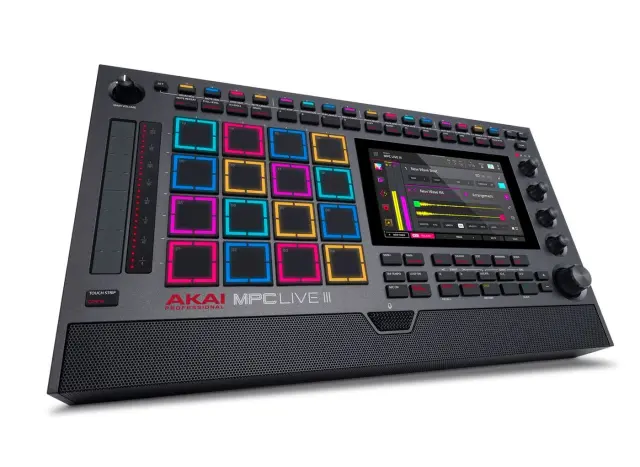
New model available: read our Akai MPC Live III review or the MPC Live 2 vs 3 upgrade guide →
How this review was made: I make my beats on an MPC Live III, which runs the same MPC software, so the workflow parts come from daily use. I have not owned a Live II: its specs come from Akai’s official specification page, its limits from Akai’s support pages, and the prices from US retailers and used listings checked in October 2026. Sources are linked at the end. First published May 10, 2025; rewritten with checked specs and prices on October 26, 2026.
What is the MPC Live II?
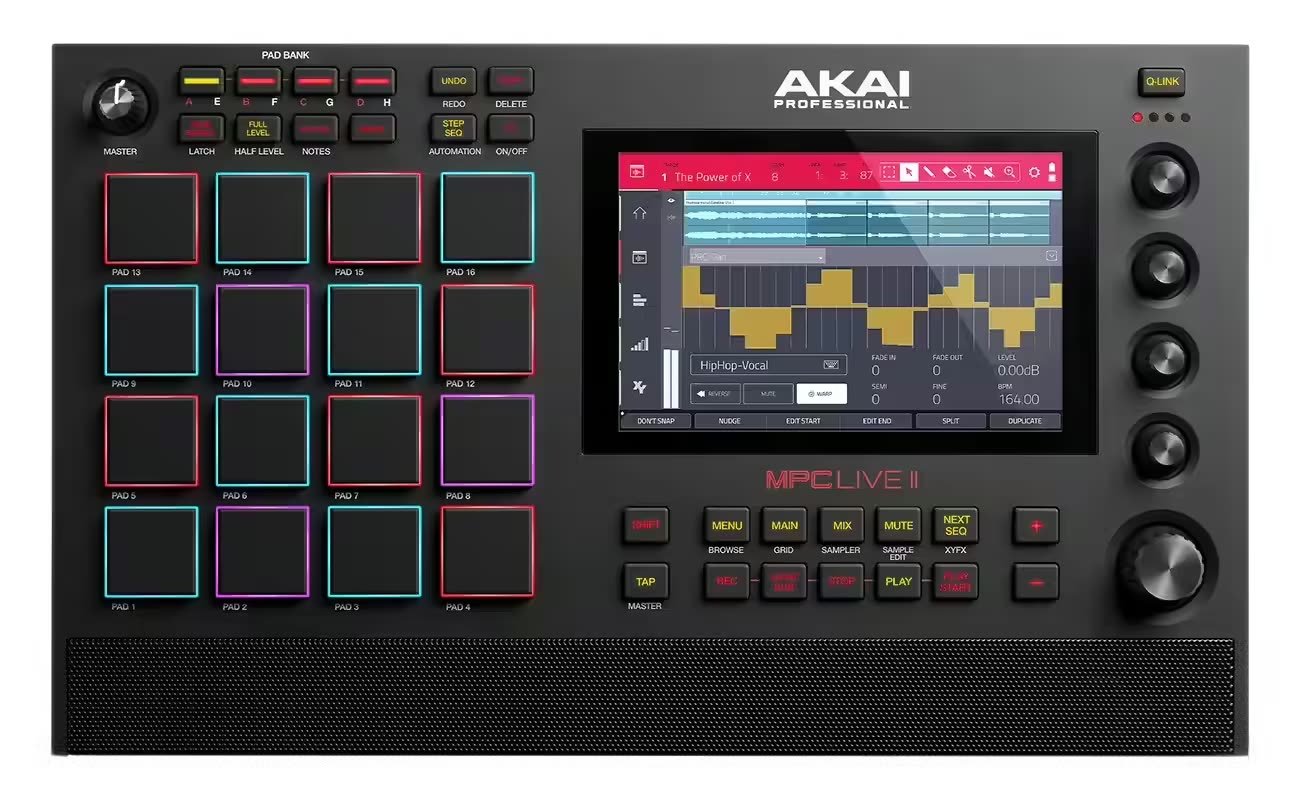
The MPC Live II is Akai Professional’s portable standalone MPC from 2020. It is a sampler, drum machine and sequencer in one box: 16 pads, a touchscreen, a battery and a pair of speakers, so it works on a couch, a train or a tour bus without a laptop. It replaced the first MPC Live, keeping the same layout and adding the built-in speakers. In October 2025 the MPC Live III took its place.
MPC Live II specs
| Spec | Akai MPC Live II |
|---|---|
| Released / US price | May 2020 · $1,199 |
| Status (October 2026) | Discontinued at major US retailers · still supported by MPC 3 |
| Processor | Gen 1 quad-core ARM (1.8 GHz) |
| RAM / storage | 2 GB / 16 GB · SD card slot · 2.5" SATA drive bay |
| Screen | 6.9" multi-touch |
| Pads | 16 RGB pads, velocity and pressure sensitive |
| Plugin instruments (standalone) | Up to 8 plugin programs |
| Audio tracks / polyphony | 8 stereo audio tracks · 64 stereo voices |
| Inputs | 2 × ¼" TRS line · RCA pair with a phono/line switch (turntable ready) |
| Outputs | 6 × ¼" (3 stereo pairs) · ¼" headphones |
| MIDI / CV | 2 in, 2 out (5-pin) · 8 CV/Gate outputs |
| Computer / USB | USB-B (USB 3.0) · 2 × USB-A host |
| Battery | Built-in, up to 5 hours (Akai figure) |
| Speakers | Built-in stereo monitors |
| Power supply | 19 V, 3.42 A, center positive |
| Size / weight | 41.2 × 24.4 × 4.6 cm (16.2 × 9.6 × 1.8 in) · 3.38 kg (7.45 lb) |
The numbers that matter most in 2026 are the processor and RAM. They set the limits Akai lists for first-generation MPCs: up to 8 plugin programs in standalone mode, 8 stereo audio tracks and 64 voices. Everything else (screen, outputs, MIDI, CV, turntable inputs) is still on par with current MPCs.
What it does well
- Sampling from vinyl. The RCA inputs have a phono/line switch, so a turntable goes straight in, with its ground wire on the ground post. Of the current MPCs, only the Live III and XL do the same; the One G2, Key 37 G2 and MPC Sample need a phono preamp. See our guide on how to sample vinyl.
- Chopping and drums. It runs MPC 3, so Sample Edit, Chop Mode, Note Repeat, swing and Q-Links work exactly as on new MPCs. Our guide on how to chop samples on an MPC applies to it step by step (press Shift + Mute/Sample Edit to open Sample Edit).
- Making beats anywhere. A battery rated at up to 5 hours and built-in speakers mean you can sketch without monitors or a power outlet.
- Connections. Six outputs, two MIDI ins and outs and eight CV/Gate outputs connect it to a mixer, synths and modular gear like a studio centerpiece.
- Software support. Akai’s MPC 3.9.1 release notes still list the Live II as a supported device.

Where it shows its age
- Plugins and tracks. Eight plugin instruments and eight audio tracks are enough for sample-based beats, but trap and melodic producers who stack synths hit the ceiling fast. Akai also limits first-generation MPCs to one DrumSynth Multi instance.
- 2 GB of RAM and 16 GB of storage. Large sample libraries fill both quickly; a SATA SSD in the drive bay fixes the storage, not the RAM.
- No mic preamps. The inputs are line and phono only, so recording a vocal or a mic needs an external preamp or interface. The Live III added two mic preamps and a built-in mic.
- No newer features. MPCe pads, the step sequencer, the touch strip, USB-C audio and Pro Stems are Live III only. Akai says Pro Stems needs the newer 8-core CPU.
Is the MPC Live II still worth it in 2026?
Used, at the right price, yes. For about $700–$800 you get a portable MPC with a battery, speakers, turntable inputs and six outputs that still receives software updates. If you make sample-based hip hop (chop a record, program drums, add a bass line), the Live II limits rarely get in the way.
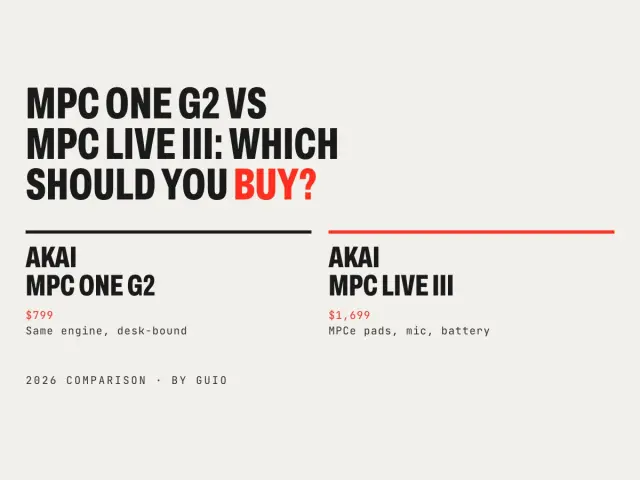
It is a worse deal if you need power. A new MPC One G2 at $799 has the same 32-plugin and 16-track limits as the Live III and a warranty, but no battery, speakers or phono inputs. If you want both power and portability, the MPC Live III is the MPC I make my beats on. Our best Akai MPC guide compares the whole range.
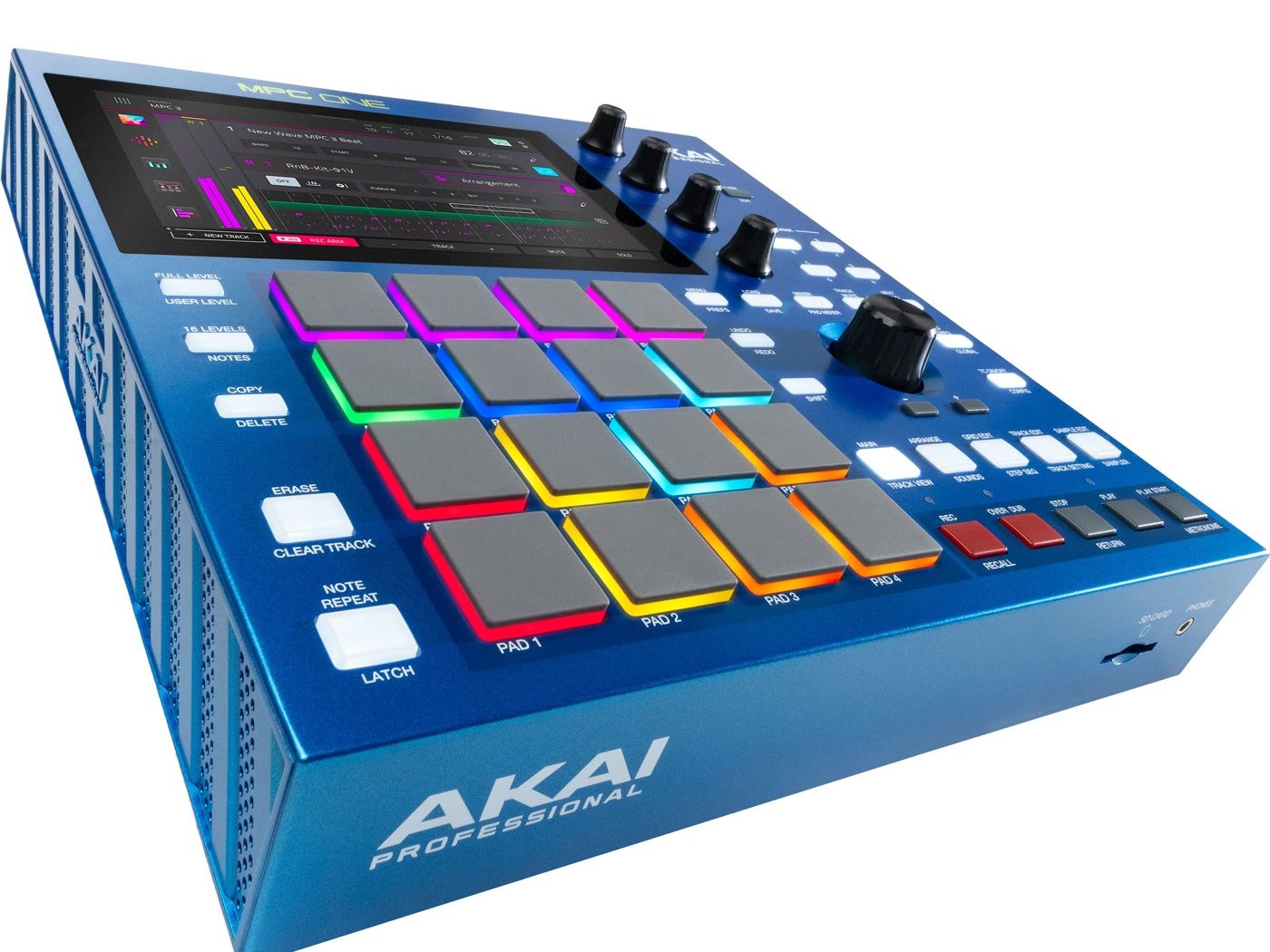
Where to buyAkai MPC One G2
MPC Live II vs Live III
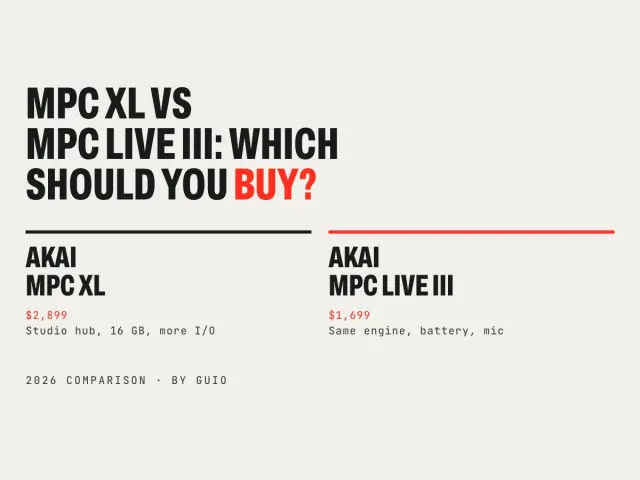
The short version: the Live III has four times the processing power, four times the RAM, four times the plugin instruments, twice the audio tracks, MPCe pads, mic preamps and USB-C audio, for $1,699 new. The Live II has a longer rated battery life (up to 5 hours vs up to 3), is lighter (3.38 kg vs 3.9 kg) and costs less than half used. The full side-by-side table is in our MPC Live II vs MPC Live III comparison.
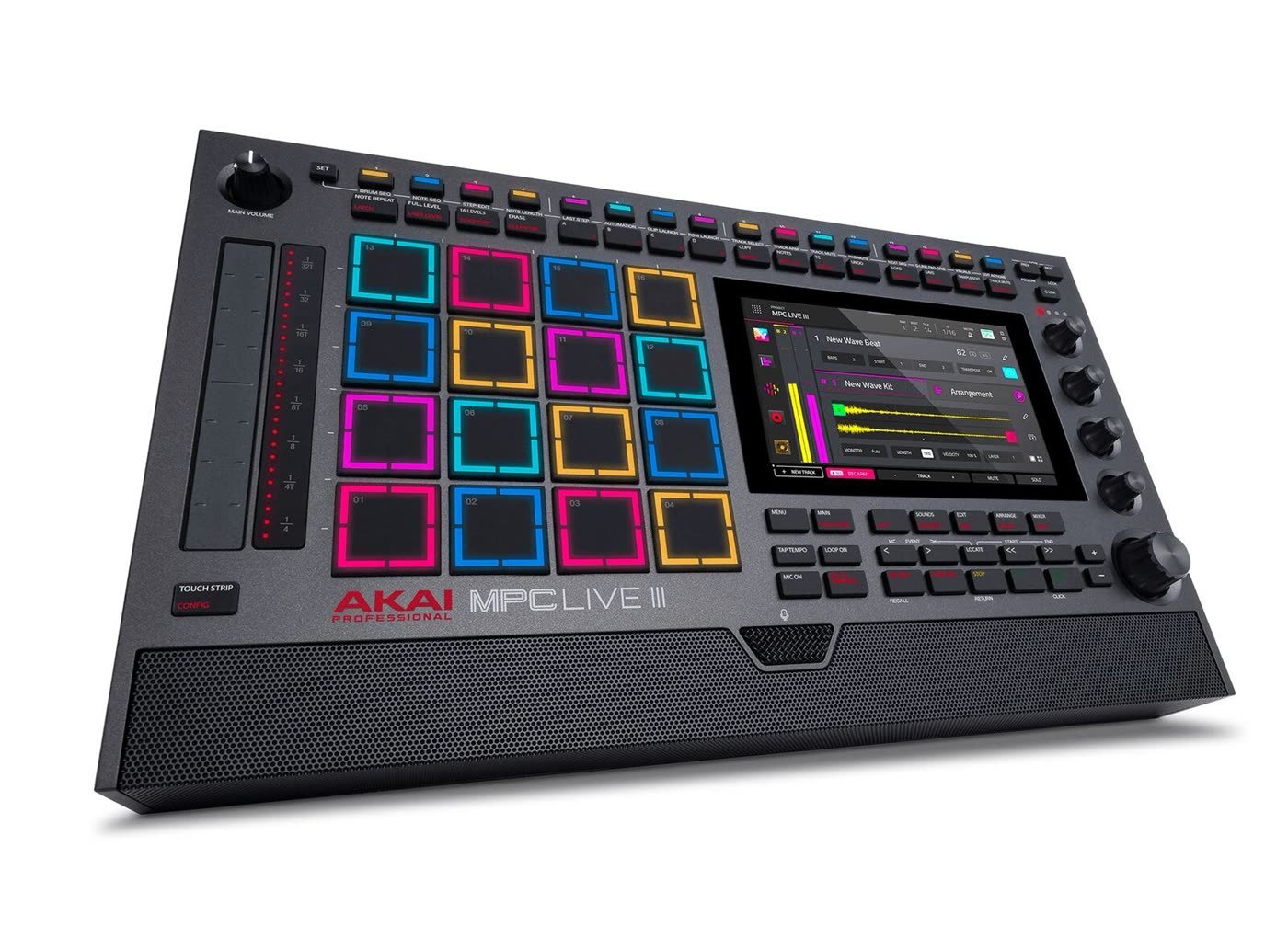
Where to buyAkai MPC Live III
MPC Live II price: new and used in 2026
The Live II launched at $1,199 in May 2020. In October 2026 Sweetwater lists it as no longer available, and Amazon US no longer sells it new (a search returns the Live III and One G2 instead). Used, Sweetwater’s Gear Exchange sold units in excellent condition for $750 and $787.50 in 2026, and US listings on Reverb in October 2026 started around $700. The gray Retro edition and units with a SATA drive or a case usually ask for more.
Before you buy a used one, check:
- Battery: ask how long it lasts unplugged today.
- Pads and knobs: every pad should respond evenly to soft and hard hits, and the Q-Links should not skip values.
- Storage: an SSD already installed in the SATA bay is worth a little extra.
- Power supply: 19 V, 3.42 A, center positive; make sure it is included.
- Software: update to the latest MPC 3 before you trust it with projects.
Where to buyAkai MPC Live II · used

Verdict
The MPC Live II is no longer the MPC to buy new, because you can’t, but it is one of the best used deals in beatmaking. Turntable straight in, a battery, speakers and the same MPC 3 workflow for well under half the price of a Live III. Buy one if your beats live on samples and drums; skip it for a One G2 or Live III if you stack plugins or record vocals into the machine.
MPC Live II FAQ
Is the MPC Live 2 still worth it in 2026?
Used, at around $700–$800, yes for sample-based producers who want a portable, battery-powered MPC with speakers and phono inputs. Its limits are 8 plugin instruments, 8 audio tracks and 2 GB of RAM. If you need more power for new money, the $799 MPC One G2 or the $1,699 MPC Live III are the better buys.
Is the MPC Live 2 discontinued?
Yes, in practice. Sweetwater lists it as no longer available and Amazon US no longer sells it new (checked October 2026). Akai keeps the product page and still supports it in MPC 3 software updates, so in 2026 you will mostly buy it used.
How much is a used MPC Live 2?
Roughly $650 to $900 in the US, depending on condition and extras. Sweetwater’s Gear Exchange sold units in excellent condition for $750 and $787.50 in 2026, and Reverb listings in October 2026 started around $700.
When was the MPC Live 2 released and how much did it cost?
Akai announced the MPC Live II in May 2020 at a US price of $1,199. It replaced the first MPC Live and added built-in speakers.
What is the difference between the MPC Live 2 and Live 3?
The Live III (October 2025, $1,699) has an 8-core CPU with four times the power, 8 GB of RAM, 128 GB of storage, 32 plugin instruments, 16 audio tracks, 256 voices, MPCe pads, step buttons, a touch strip, mic preamps, a built-in mic and USB-C audio. The Live II keeps a longer rated battery life (up to 5 hours vs up to 3).
Is the MPC Live 2 standalone?
Yes. It runs the MPC software on its own, with a battery, a touchscreen and built-in speakers, so you can make full beats without a computer. It can also work as a controller for the MPC desktop software over USB.
How long does the MPC Live 2 battery last?
Akai rates it at up to 5 hours. Real life depends on screen brightness, the speakers and how heavy the project is, and on a used unit the battery may have lost capacity, so ask the seller.
Can you plug a turntable into the MPC Live 2?
Yes. Its RCA inputs have a phono/line switch on the back: set it to phono, connect the turntable and its ground wire, and sample straight from vinyl. Our guide on how to sample vinyl covers the whole process.
How much does the MPC Live 2 weigh?
Akai lists 3.38 kg (7.45 lb). It measures 16.2 × 9.6 × 1.8 inches (41.2 × 24.4 × 4.6 cm).
Next step Put it to work: how to chop samples on an MPC →
Sources
- Akai Professional: MPC Live II technical specifications
- Akai support: how many plugin programs can I use?
- Akai support: MPC Live III FAQ (comparison with the Live II, Pro Stems)
- Akai: MPC 3.9.1 release notes (supported hardware)
- Akai: MPC Standalone OS user guide v3.4 (Sample Edit on the Live II)
- Attack Magazine: Akai announces the MPC Live II (May 2020, $1,199)
- Sonic State: Sonic LAB, Akai MPC Live II
- Sweetwater: MPC Live II (no longer available)
- Sweetwater Gear Exchange: used MPC Live II sold for $750 (April 2026)
Prices are the US launch price and used prices seen in October 2026; they change often. GUIO Records is not affiliated with Akai Professional.