This article contains affiliate links. If you buy through them, GUIO Records may earn a small commission at no extra cost to you. As an Amazon Associate I earn from qualifying purchases.
Best Audio Interface for Recording Rap Vocals at Home (2026): Top 10 Picks From a Hip Hop Producer
Your mic gets the attention, but the audio interface is what turns your voice into a file. The right one gives your mic enough clean gain, keeps your takes from clipping and lets you hear yourself without delay. Here are the 10 best audio interfaces for recording rap at home in 2026, from $139 to the Apollo on my own desk.
Where to buyFocusrite Scarlett 2i2 4th Gen
An audio interface does three jobs for a rapper. It powers and amplifies your microphone with a preamp, converts that signal into digital audio for your DAW, and sends the beat and your voice back to your headphones. Get those three right and your vocals start sounding like records.
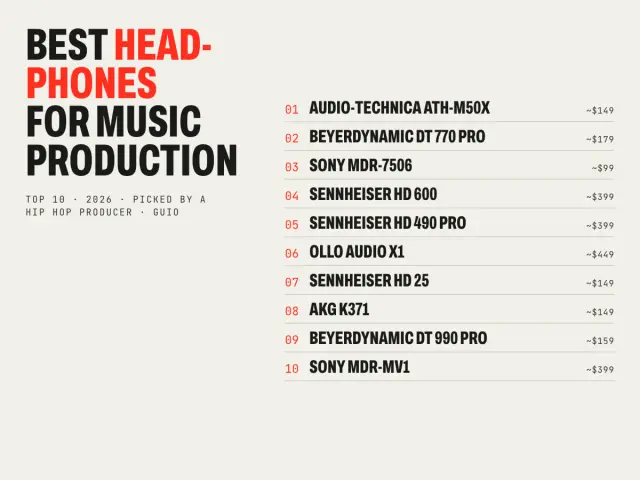
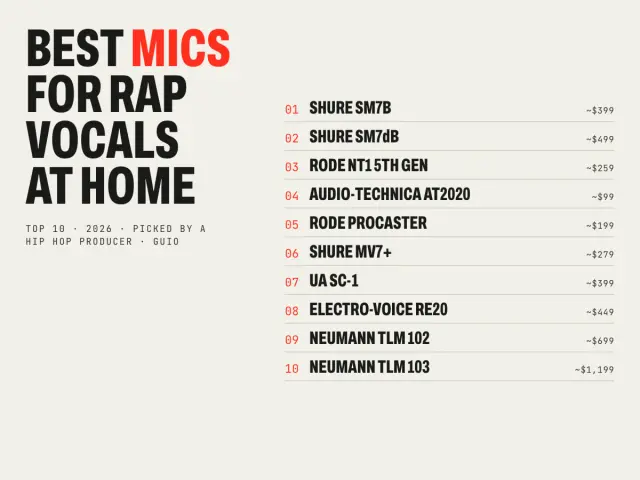
This guide ranks interfaces by what matters for rap vocals in a home studio: enough clean gain for dynamic mics like the Shure SM7B, low noise, simple level setting, zero-latency monitoring and value for money. It is the third part of our home studio series, after the best microphones for rap vocals and the best headphones for music production.
How this list was made: I am a hip hop producer and the Apollo Twin X is the interface in my home studio, where I use it for production and mixing. I have not tested all ten interfaces side by side, and I am not a vocalist myself, so the picks combine my own experience with manufacturer specs and trusted reviews, credited at the end. Prices change often; the buttons show the current price.
What actually matters for rap vocals
- Gain. Dynamic mics like the SM7B, Procaster and RE20 are quiet. Shure says the SM7B needs about 60 dB of gain for normal speech close to the mic. Look at the “gain range” in the specs: 64 dB or more is comfortable, under 60 dB means you may want a booster like a Cloudlifter.
- Noise. When you turn the gain up, cheap preamps hiss. The spec to look for is EIN (equivalent input noise): the more negative, the quieter. −127 dBu or better is very good.
- Level control. Rap goes from whispered ad-libs to shouted hooks in one take. Features like Focusrite’s Clip Safe or a built-in compressor help you avoid ruined takes.
- Monitoring. You need to hear yourself with no delay. Direct monitoring is standard; Apollo interfaces go further and let you track through effects in real time.
- Inputs. One mic input is enough for solo vocals. Two lets you record a feature, a keyboard or your MPC at the same time.
The top 10 at a glance
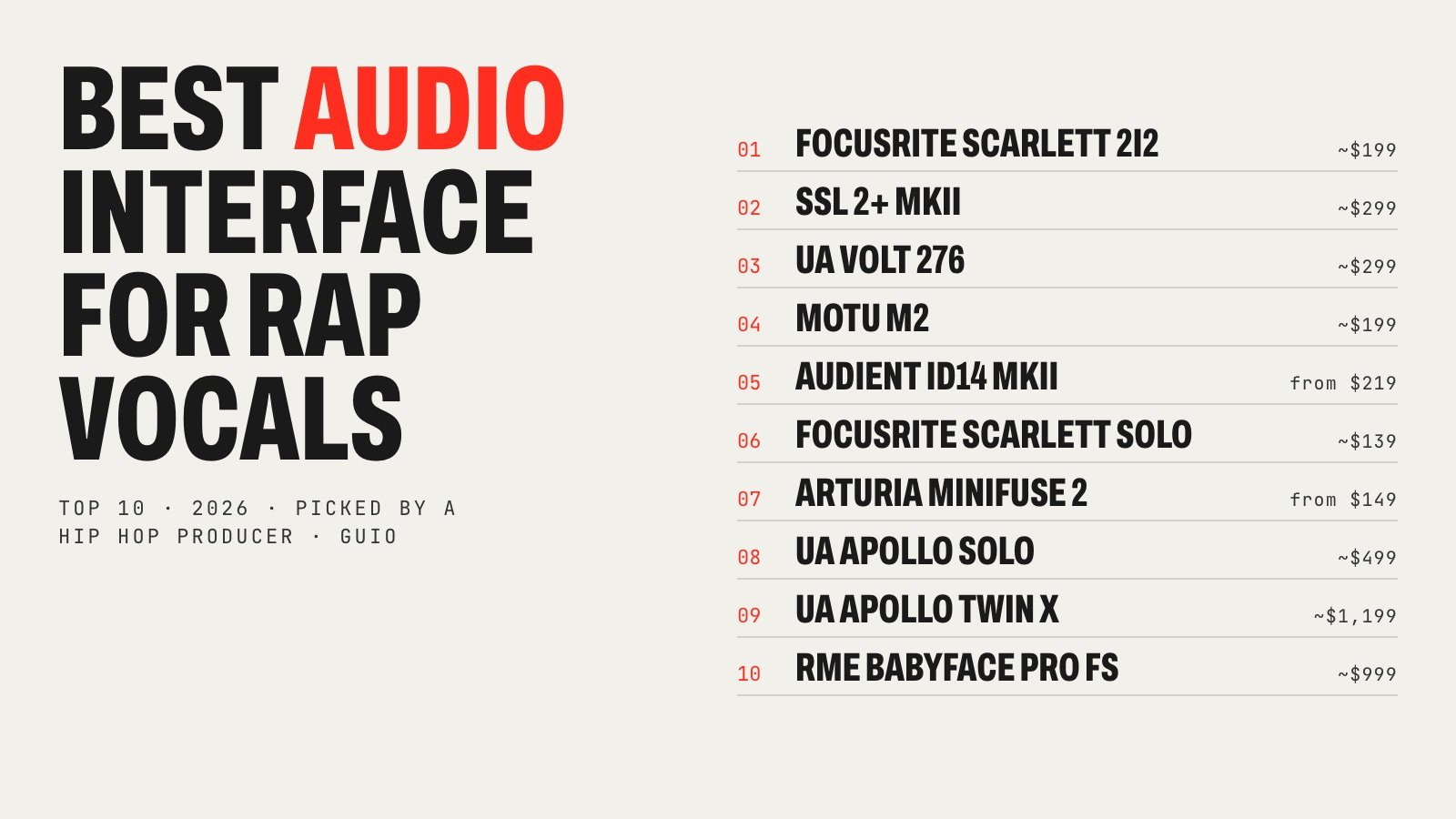
| Interface | Mic inputs | Max gain | Approx. price | Best for |
|---|---|---|---|---|
| 1. Focusrite Scarlett 2i2 4th Gen | 2 | 69 dB | $199 | Best overall for most rappers |
| 2. SSL 2+ MKII | 2 | 64 dB | $299 | Cleanest vocals under $300 |
| 3. Universal Audio Volt 276 | 2 | n/a | $299 | Built-in 1176-style compressor |
| 4. MOTU M2 | 2 | n/a | $199 | Low noise and great metering |
| 5. Audient iD14 MKII | 2 (+8 via ADAT) | 68 dB | from $219 | Room to grow |
| 6. Focusrite Scarlett Solo 4th Gen | 1 | 57 dB | $139 | Solo artists on a budget |
| 7. Arturia MiniFuse 2 | 2 | 56 dB | from $149 | Beatmakers with MIDI gear |
| 8. Universal Audio Apollo Solo | 2 | 65 dB | $499 | Entry into UAD and Unison |
| 9. Universal Audio Apollo Twin X | 2 | 65 dB | $1,199 | Recording through classic hardware sounds |
| 10. RME Babyface Pro FS | 2 | 76 dB range | $999 | Rock-solid drivers, pro use |
“n/a”: the manufacturer page we could access does not publish a gain figure. Gain figures are taken from official spec pages or trusted reviews, credited below.
1. Focusrite Scarlett 2i2 4th Gen: best overall for most rappers
The most popular home studio interface in the world got a serious upgrade with the 4th generation. Focusrite redesigned the preamps with a 69 dB gain range and −127 dBu EIN, enough for an SM7B in most situations. MusicRadar’s reviewer found the reworked preamps ideal even for low-output ribbon mics.
Two features matter a lot for rappers. Auto Gain listens to you for a few seconds and sets the level for you. Clip Safe watches your input and turns the gain down before a loud line distorts. Add the Air mode, with a presence lift or presence plus harmonic drive, and you have a lot of interface for about $199.
Buy it if: you want one reliable interface that does everything well and helps you avoid mistakes.
Where to buyFocusrite Scarlett 2i2 4th Gen
2. SSL 2+ MKII: the cleanest vocals under $300
Solid State Logic built its name on the consoles in the world’s biggest studios. The SSL 2+ MKII brings two SSL-designed preamps with a 64 dB gain range and a very low −130.5 dBu EIN, plus the Legacy 4K button, which adds a touch of the brightness and harmonics of SSL’s classic 4000-series consoles.
MusicRadar names it its pick for vocal recording, praising preamps among the cleanest at this level. The “+” version adds two headphone outputs and MIDI in and out, very handy when a feature artist is in the room or when you want to sequence an MPC or a synth.
Buy it if: vocals are your priority and you want a more premium sound and feel.
Where to buySSL 2+ MKII
3. Universal Audio Volt 276: a compressor in the box
The Volt 276 is the most “record-ready” interface under $300. Its Vintage mode is inspired by the UA 610 tube preamp, and it has a built-in analog 76 Compressor modeled on the legendary 1176, with presets for vocals, guitars and drums. For rap, a little 1176-style compression while you record keeps loud and quiet lines closer together, so your raw takes already sound controlled.
One honest caveat: compression on the way in cannot be undone, so start gentle. Reviews also note the compressor can add a bit of noise. List price is $374, but it usually sells for around $299.
Buy it if: you want vintage UA character without paying for an Apollo.
Where to buyUniversal Audio Volt 276
4. MOTU M2: low noise and the best meters at this price
The MOTU M2 is a favorite of engineers on a budget. It uses the same ESS Sabre32 converter technology found in much more expensive gear, with 120 dB of dynamic range on the main outputs and −129 dBu EIN on the mic inputs. Its full-color LCD level meters on the front are a real advantage: you can see exactly how hot your vocal is without looking at the screen.
It sounds clean and neutral rather than colored. It has no built-in “vintage” tricks, which is a plus if you like to shape your vocals in the mix.
Buy it if: you want clean, accurate sound and clear metering for about $199.
Where to buyMOTU M2
5. Audient iD14 MKII: room to grow
Audient puts the same Console Mic Preamp design from its studio desks into the iD14, with up to 68 dB of gain, very low noise and a warm, natural sound. The big extra is the ADAT/S/PDIF digital input: later, you can add an 8-channel preamp and record a full band or a group of rappers without replacing the interface.
Its big scroll wheel can also control plugins in your DAW, which is surprisingly useful while mixing.
Buy it if: you want great preamps today and the option to expand tomorrow.
Where to buyAudient iD14 MKII
6. Focusrite Scarlett Solo 4th Gen: best on a budget
If you only record yourself, the Scarlett Solo has what you need: one mic preamp, one instrument input, Air mode and Focusrite’s 4th-gen converters. The trade-off is gain: 57 dB is enough for condenser mics like the AT2020 or NT1 and for loud rap delivery, but a quiet SM7B take will need a booster.
Buy it if: you are starting out, record solo and pair it with a condenser or an SM7dB.
Where to buyFocusrite Scarlett Solo 4th Gen
7. Arturia MiniFuse 2: built for beatmakers
The MiniFuse 2 is a producer’s interface. Besides two mic inputs, it has MIDI in and out and a USB hub on the back, so you can connect a controller and sync an MPC or a drum machine without extra boxes. It comes with a solid software bundle from Arturia.
Its 56 dB gain range is the lowest on this list, so it pairs better with condensers or with dynamic mics plus a booster.
Buy it if: you make beats with hardware and record vocals with a condenser.
Where to buyArturia MiniFuse 2
8. Universal Audio Apollo Solo: the entry into UAD
The Apollo Solo (formerly called Arrow) is the most affordable way into the Apollo world. It has Unison preamps: when you load a preamp plugin like the included UA 610-B, the hardware changes its impedance and gain behavior to act like the original. Its SOLO DSP chip runs UAD plugins in real time, so you can monitor through effects with no noticeable latency. Gain goes from +10 to +65 dB.
The DSP is limited to one chip, so you can only run a few plugins at once, and it comes in Thunderbolt and USB versions (the USB version is for Windows), so check which one fits your computer.
Buy it if: you want the Apollo workflow on a smaller budget.
Where to buyUniversal Audio Apollo Solo
9. Universal Audio Apollo Twin X: the one I use
This is the interface on my desk, where I use it to produce and mix, so here is my honest take. The Apollo Twin X is not about specs on paper, although they are great: elite-class converters and two Unison preamps with +10 to +65 dB of gain. It is about workflow. With its built-in UAD DSP, you can record vocals through models of classic gear, like a Neve or API preamp into an 1176 or LA-2A compressor, and hear the finished-sounding vocal in my headphones while I record, without the delay you get from running plugins on the computer.
For a rapper, that changes the session: you perform better when your voice already sounds like a record. MusicRadar calls it the best interface for most home studio users. The current version is the Gen 2, sold as DUO (two DSP chips) or QUAD (four), which adds features like Auto-Gain; DUO bundles sell for around $1,199.
The downsides: it is expensive, it needs Thunderbolt, and the best UAD plugins are paid extras. If you are just starting, the money is better spent on a good mic and room treatment first.
Buy it if: you record often, you are serious about vocals and you want a pro studio workflow at home.
Where to buyUniversal Audio Apollo Twin X DUO Gen 2
10. RME Babyface Pro FS: the engineer’s choice
RME is famous for one thing above all: drivers that just work, with very low latency and stability year after year. The Babyface Pro FS is a compact, bus-powered interface with two digitally controlled preamps, a 76 dB gain range in 1 dB steps and RME’s TotalMix FX software for complex headphone mixes.
It is less “plug and play” than a Scarlett and has no vintage color, but it is built for professionals who need reliability, including on the road.
Buy it if: you want a clean, reliable pro interface for years.
Where to buyRME Babyface Pro FS
Videos: hear and see the difference


How to choose your interface
- Match it to your mic. Low-output dynamic mic (SM7B, Procaster, RE20): choose 64 dB of gain or more, or add a Cloudlifter. Condenser or SM7dB: any interface here works.
- Count your inputs. Just you: one input. You plus a feature, a keyboard or your MPC: two.
- Think about your workflow. Want finished vocals while you record? Volt 276 or an Apollo. Prefer to shape everything in the mix? Scarlett, SSL, MOTU or Audient.
- Check the connection. Most use USB-C. Apollo Twin X needs Thunderbolt.
- Budget for the rest. A mic, closed-back headphones, a pop filter and some room treatment matter as much as the interface.
Where to buyCloudlifter CL-1 mic activator
Five tips for recording rap vocals with any interface
- Set gain on your loudest line. Rap the hook as loud as you will in the take and aim for peaks around −10 dBFS.
- Record at 24-bit. It gives you plenty of headroom, so you do not need to record hot.
- Use direct monitoring. Hear yourself from the interface, not through the DAW, to avoid delay.
- Keep the beat lower than you think in your headphones, so you hear your own pitch and timing.
- Close-backed headphones only when tracking, so the beat does not bleed into the mic. See our headphone guide.
Using an MPC? The MPC Live III can record vocals on its own, but connecting it to a computer and a dedicated interface gives you better preamps and an easier mix. Need a mic to go with it? Start with our rap vocal mic guide.
Verdict: which interface should you buy?
For most rappers recording at home, the Focusrite Scarlett 2i2 4th Gen is the safest buy: enough gain, low noise and Clip Safe to save your best takes. If vocals are everything to you, the SSL 2+ MKII is worth the extra $100, and if you want your raw takes to come out compressed and warm, get the Volt 276.
When you are ready for a pro studio workflow, the Apollo Twin X is the interface I trust in my own studio. But remember the order: room, mic, performance, then interface. A great take through a $199 Scarlett beats a weak take through a $1,199 Apollo every time.
Audio interface FAQ
What is the best audio interface for recording rap vocals at home?
For most rappers, the Focusrite Scarlett 2i2 4th Gen: 69 dB of gain, Auto Gain and Clip Safe for about $199. If you want the cleanest preamps under $300, look at the SSL 2+ MKII, and if you want to record through classic studio sounds, the Universal Audio Apollo Twin X is the pro choice.
How much gain do I need for a Shure SM7B?
Shure says the SM7B needs about 60 dB of gain for normal speech close to the mic. The Scarlett 2i2 4th Gen (69 dB), Audient iD14 (68 dB), Apollo Twin X and Apollo Solo (65 dB) and SSL 2+ MKII (64 dB) reach that on paper. Rappers usually deliver louder than normal speech, so they need less, but an inline booster like a Cloudlifter or the SM7dB removes the problem completely.
Do I need a 1-input or 2-input interface?
If you only record your own vocals, one mic input is enough. Two inputs are useful for recording two people, a mic plus a keyboard or an MPC, or a stereo source. Most producers end up wanting two.
Is a Universal Audio Apollo worth it for rap?
If you record often and like a finished sound while you track, yes. Apollo interfaces run UAD plugins on built-in DSP chips, so you can record through compressors and EQs like the 1176 or LA-2A with almost no latency, and Unison preamps emulate classic hardware. If you are starting out, a Scarlett 2i2 or SSL 2+ will get you 90% of the way for much less.
What does latency mean and why does it matter?
Latency is the delay between singing into the mic and hearing yourself in your headphones. Too much delay throws off your timing. Every interface on this list has direct monitoring, which lets you hear your mic with no delay, and Apollo interfaces also let you monitor through plugins in real time.
Can I record vocals into an MPC instead of an audio interface?
Yes. Standalone MPCs like the MPC Live III and MPC One G2 have inputs and can record vocals, but a dedicated interface usually gives you better preamps, more gain for dynamic mics and an easier setup with a computer DAW.
Sources
- Focusrite: Scarlett 2i2 4th Gen specifications
- Focusrite: Scarlett Solo 4th Gen specifications
- Solid State Logic: SSL 2+ MKII
- Audient: iD14
- Arturia: MiniFuse 2 specifications
- RME: Babyface Pro FS
- Adorama: Apollo Twin X DUO Gen 2 specifications
- MusicTech: UA rebrands Arrow as Apollo Solo
- zZounds: Apollo Solo USB specifications
- Sound Pure: Universal Audio Volt 276
- American Musical Supply: MOTU M2
- MusicRadar: the best audio interfaces 2026
- MusicTech: SSL 2 and 2+ MKII review
- Shure: SM7B output level and preamp gain
Prices are approximate US street prices in October 2026 and change often. GUIO Records is not affiliated with any of the brands listed.