This article contains affiliate links. If you buy through them, GUIO Records may earn a small commission at no extra cost to you. As an Amazon Associate I earn from qualifying purchases.
Best Headphones for Music Production and Recording (2026): Top 10 Picks From a Hip Hop Producer
Headphones are the one piece of gear you use every single session: to make the beat, to record the vocal and, for most home producers, to mix. Here are the 10 best headphones for music production in 2026, closed and open-back, including the pairs I use myself.
Where to buyAudio-Technica ATH-M50x
There is no single “best” pair, because producers use headphones for three different jobs. Making beats needs a comfortable, punchy, honest sound. Recording vocals needs isolation, so the beat does not bleed into the mic. Mixing needs the most neutral, natural sound you can get. This list covers all three, from a $99 studio classic to a hand-built pair calibrated one by one.
How this list was made: I mix on the OLLO X1 and DJ with the Sennheiser HD 25. I have not tested the other eight side by side; those picks combine long-standing studio standards, manufacturer specs and trusted reviews, credited at the end. Prices change often; the buttons show the current price.
Closed-back or open-back?
Closed-back headphones seal around your ears. They block outside noise and keep the sound in, which is exactly what you need when you record vocals (no beat bleeding into the mic) or work in a noisy room. The trade-off: the sound feels more “inside your head” and the bass can be exaggerated.
Open-back headphones let air and sound pass through the cups. They sound wider and more natural, closer to speakers, and they are less tiring over long sessions, which makes them the better tool for mixing. But they leak sound both ways, so they are useless for recording vocals and not great on a train.
Simple rule: one closed pair for making beats and recording, one open pair for mixing. If you can only buy one, start closed.
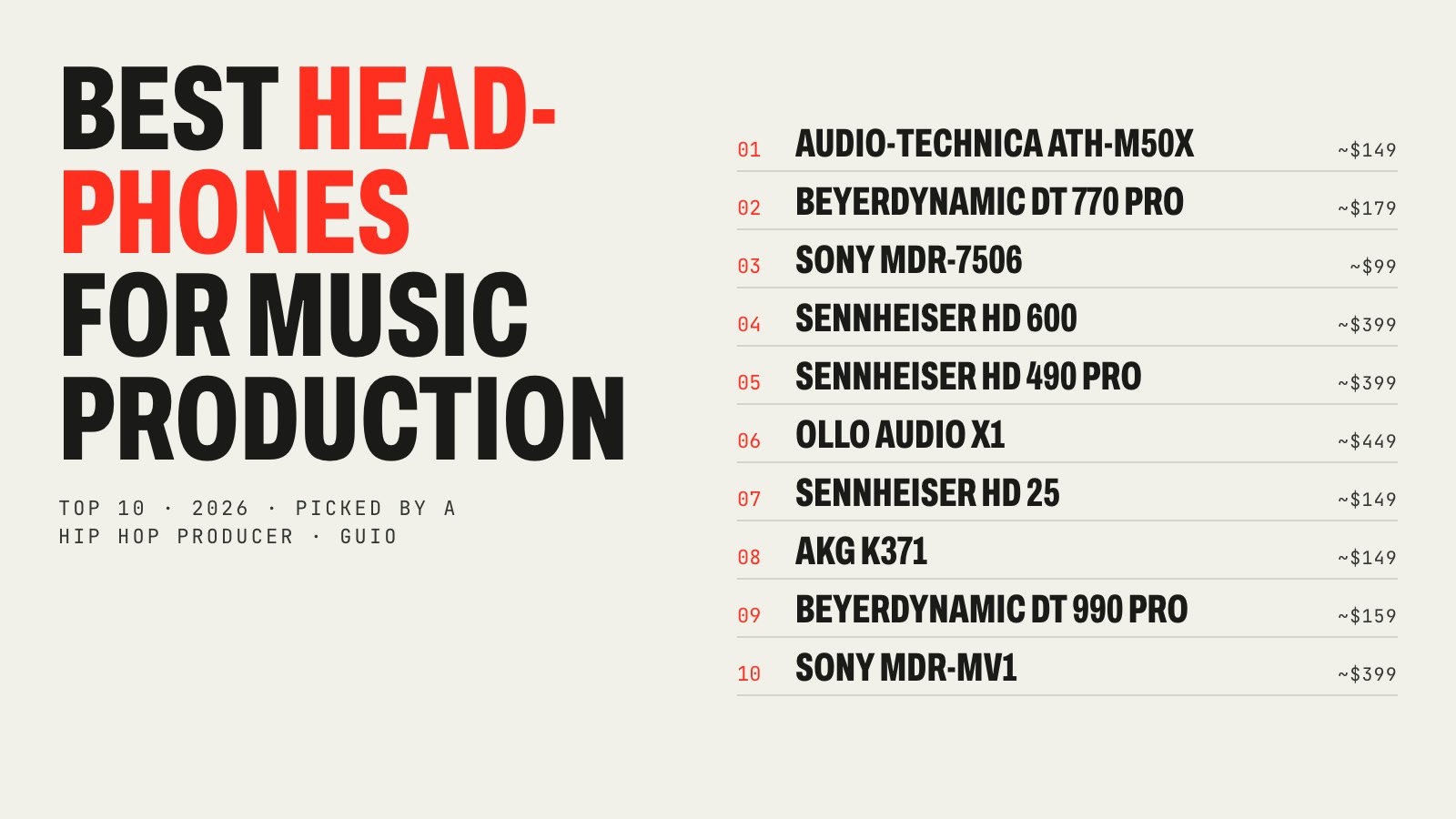
The top 10 at a glance
| Headphones | Type | Impedance | Approx. price | Best for |
|---|---|---|---|---|
| 1. Audio-Technica ATH-M50x | Closed | 38 Ω | $149 | Making beats, all-rounder |
| 2. Beyerdynamic DT 770 Pro | Closed | 32 / 80 / 250 Ω | $179 | Recording vocals, long sessions |
| 3. Sony MDR-7506 | Closed | 63 Ω | $99 | Budget studio classic |
| 4. Sennheiser HD 600 | Open | 300 Ω | $399 | Mixing on a budget |
| 5. Sennheiser HD 490 Pro | Open | 130 Ω | $399 | Producing and mixing |
| 6. OLLO Audio X1 | Open | 32 Ω | $449 | Calibrated mixing (what I use) |
| 7. Sennheiser HD 25 | Closed, on-ear | 70 Ω | $149 | DJing and loud rooms |
| 8. AKG K371 | Closed | 32 Ω | $149 | Balanced closed-back sound |
| 9. Beyerdynamic DT 990 Pro | Open | 80 / 250 Ω | $159 | Budget open-back |
| 10. Sony MDR-MV1 | Open | 24 Ω | $399 | Mixing and spatial audio |
1. Audio-Technica ATH-M50x: best all-rounder
If you have watched a beatmaking video in the last ten years, you have probably seen these. The ATH-M50x is a closed-back monitor with 45 mm drivers, solid bass and clear mids. It folds, the cups swivel for one-ear monitoring and the cable is detachable, with several cables in the box.
The bass is a little hyped, which makes beats fun to make but is worth remembering when you mix. Long sessions can get warm on the ears.
Buy them if: you want one pair that does everything well and lasts for years.
Where to buyAudio-Technica ATH-M50x
2. Beyerdynamic DT 770 Pro: best for recording vocals
The DT 770 Pro has been the default closed-back in recording studios for more than two decades. The isolation is excellent, the velour pads are comfortable for hours and the sound is detailed with deep, controlled bass.
It comes in 32, 80 and 250 Ω versions. For an interface and vocal booth, the 80 Ω version is the sweet spot. On the classic model the cable is not detachable.
Buy them if: you record vocals often or spend long sessions with headphones on.
Where to buyBeyerdynamic DT 770 Pro 80 ohm
3. Sony MDR-7506: best budget studio classic
In production since the early 1990s, the MDR-7506 is still in studios, radio stations and edit bays around the world. For around $99 you get a light, foldable closed-back with a clear, detailed sound that shows you every click and harsh S.
The treble is bright and the coiled cable is fixed, but at this price nothing is as proven.
Buy them if: you are on a budget or need a spare pair for the artist in the booth.
Where to buySony MDR-7506
4. Sennheiser HD 600: best for mixing on a budget
The HD 600 is a legend for a reason: open-back, with some of the most natural mids you can buy, which is where vocals and most instruments live. Many engineers still check mixes on it, and it often sells well below its list price.
At 300 Ω it needs a decent headphone output; most audio interfaces drive it fine, a phone will not. The deepest bass is gentle rather than punchy.
Buy them if: you want a proven, honest mixing reference without spending a fortune.
Where to buySennheiser HD 600
5. Sennheiser HD 490 Pro: best for producing and mixing
The HD 490 Pro is Sennheiser’s modern open-back built for studios. It comes with two sets of ear pads, one tuned for producing and one for mixing, and it is very comfortable. MusicRadar named it its top studio headphone after testing a dozen models.
Buy them if: you want a newer, more comfortable alternative to the HD 600 and do most of your work on headphones.
Where to buySennheiser HD 490 Pro
6. OLLO Audio X1: what I mix on
The OLLO X1 is the pair I use to mix. It is an open-back headphone hand-built in Slovenia, with walnut cups, a steel headband and a very flat, natural sound. The big difference: each pair is measured and calibrated individually, and you get its own calibration file as a plugin (developed with Realphones), so what you hear is extremely close to neutral.
Two more things I like as a producer: every part can be replaced with simple tools, so it is built to last, and at 32 Ω it is easy to drive from any interface. It comes with a hard case and a 5-year warranty. You can buy it on Amazon or directly from OLLO, which offers a 90-day money-back trial.
Buy them if: you mix on headphones and want the most accurate, consistent reference for the money.
Where to buyOLLO Audio X1
7. Sennheiser HD 25: best for DJs and loud rooms
The HD 25 is what I DJ with, and what you will see on DJs in most booths. It is a closed, on-ear headphone that weighs only about 140 g, gets very loud, isolates well from a loud room and has a rotating capsule for one-ear cueing. Almost every part is replaceable.
For long mixing sessions it is not the most comfortable or neutral choice, but for DJing, beatmaking on the go and loud environments it is hard to beat.
Buy them if: you DJ, perform live or need tough headphones that travel.
Where to buySennheiser HD 25
8. AKG K371: the balanced closed-back
The K371 is a closed-back tuned to follow a widely used target curve for natural-sounding headphones, so it sounds more balanced than most closed models at its price. It is light, folds flat and has a detachable cable.
Buy them if: you want closed-back isolation with a more neutral sound for both producing and checking mixes.
Where to buyAKG K371
9. Beyerdynamic DT 990 Pro: best budget open-back
The open-back sibling of the DT 770. The DT 990 Pro has a wide, airy sound and the same comfortable build for a very low price. The treble is bright, so be careful not to mix too dark to compensate, and the 250 Ω version wants a strong headphone output.
Buy them if: you want to try open-back mixing without spending much.
Where to buyBeyerdynamic DT 990 Pro
10. Sony MDR-MV1: for mixing and spatial audio
Sony’s modern open-back reference, the MDR-MV1, is very light and designed with Dolby Atmos and spatial audio mixing in mind, while still working as a standard stereo mixing headphone. At 24 Ω it is easy to drive.
Buy them if: you mix for streaming platforms and want to work in spatial formats too.
Where to buySony MDR-MV1
Videos: hear what reviewers say


How to choose your headphones
- Decide the job first. Recording and beatmaking: closed-back. Mixing in a quiet room: open-back.
- Check impedance against your interface. 32–80 Ω pairs are easy to drive. 250–300 Ω pairs need a strong headphone output.
- Comfort matters more than specs. You will wear them for hours. Velour pads breathe better than leatherette.
- Replaceable parts save money. Pads and cables wear out. Pairs like the HD 25, OLLO X1 and DT 770 Pro are easy to repair.
- Consider calibration. Software like Sonarworks SoundID Reference or Realphones corrects your headphones’ curve. The OLLO X1 includes a calibration made for your exact pair.
Four tips for mixing on headphones
- Use reference tracks you know well, loaded in the same session.
- Keep the volume moderate. Loud listening fools your ears and tires them fast.
- Check on other systems: speakers, a car, a phone, earbuds. Headphones exaggerate stereo width and hide room problems.
- Take breaks. Ten minutes off every hour keeps your judgment fresh.
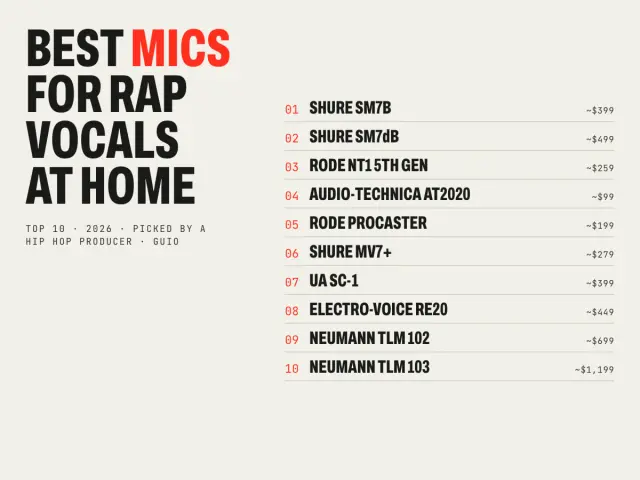
Recording vocals too? Pair your closed-backs with the right mic from our guide to the best microphones for rap vocals at home.
Verdict: which headphones should you buy?
If you can only buy one pair, get the Audio-Technica ATH-M50x or the Beyerdynamic DT 770 Pro: closed-back, tough and good enough for every stage of a beat. On a tight budget, the Sony MDR-7506 is the proven classic.
When you are ready to mix seriously, add an open-back pair: the Sennheiser HD 600 for value, the HD 490 Pro for comfort, or the OLLO X1 if you want the most accurate, calibrated reference. That is the combination I trust in my own studio.
Studio headphones FAQ
What are the best headphones for music production?
For most producers, the Audio-Technica ATH-M50x is the best all-rounder: closed-back, durable and accurate enough to make beats. For mixing, an open-back pair like the Sennheiser HD 600, HD 490 Pro or OLLO Audio X1 gives a more natural, wider sound.
Should I use open-back or closed-back headphones?
Use closed-back headphones (ATH-M50x, DT 770 Pro, MDR-7506, HD 25) when you record vocals, so the beat does not bleed into the mic, and when you work in a noisy room. Use open-back headphones (HD 600, HD 490 Pro, OLLO X1, DT 990 Pro, MDR-MV1) for mixing in a quiet room: they sound more natural and tire your ears less.
What are the best headphones for recording vocals?
Closed-back headphones with good isolation and comfort. The Beyerdynamic DT 770 Pro (80 Ω) is a studio favorite for vocal booths, and the Audio-Technica ATH-M50x and Sony MDR-7506 are great alternatives.
Can you mix a song on headphones?
Yes, many producers do, especially at home. Use open-back headphones, compare with reference tracks, keep the volume moderate and check your mix on speakers, a car and a phone before releasing it. Calibration software like Sonarworks SoundID Reference or Realphones also helps.
Do high-impedance headphones need an amplifier?
Headphones like the 300 Ω Sennheiser HD 600 or 250 Ω DT 990 Pro need more power than a phone can give. Most audio interfaces drive them well, but a weak headphone output can make them sound quiet. Lower-impedance models (32–80 Ω) are easier to drive.
What headphones do DJs use?
The Sennheiser HD 25 has been a DJ standard for decades: light, closed on-ear, very loud, with a rotating capsule for one-ear monitoring and replaceable parts. I use them for DJing.
Sources
- OLLO Audio: X1 specifications and calibration
- Mixdown Online: OLLO X1 headphones review
- Audiophile Heaven: OLLO X1 review
- MusicRadar: studio headphone roundup (Sennheiser HD 490 Pro)
- Full Compass: Sennheiser HD 25 specifications
- Sweetwater: Sennheiser HD 600
- Sweetwater: Sony MDR-MV1
- Headphones.com: AKG K371 review
- SoundGuys: Beyerdynamic DT 990 Pro review
- The Post Flow: Sony MDR-7506 vs Audio-Technica ATH-M50x
Prices are approximate US street prices in October 2026 and change often. GUIO Records is not affiliated with any of the brands listed.