Makaveli “The Don Killuminati” at 30: Producers, Samples and the 7 Day Story
This article contains affiliate links. If you buy through them, GUIO Records may earn a small commission at no extra cost to you. As an Amazon Associate I earn from qualifying purchases. Outside the US, Amazon links open your local Amazon store (UK, Canada, Germany, France, Italy, Spain, Netherlands, Poland or Sweden).
Released on November 5, 1996, the last album 2Pac finished came from two overlooked Death Row producers. Who made each beat, what they used and how long it really took.
Own the recordThe Don Killuminati: The 7 Day TheoryMakaveli
On November 5, 1996, less than two months after Tupac Shakur was shot in Las Vegas, Death Row released an album by an artist nobody had heard of: Makaveli. The Don Killuminati: The 7 Day Theory sold 664,000 copies in its first week, went to No. 1 and became the record many fans, J. Cole among them, rank above everything else he made.
Thirty years on, the legend still gets repeated: a whole album in seven days. This piece looks at it from the producer’s side: who actually made these beats, what they sampled or replayed, and what the people in the room say about how long it really took.
Short answer: who produced Makaveli?
Most of The Don Killuminati was produced by two Death Row in-house producers, Tyrone “Hurt-M-Badd” Wrice and Darryl “Big D” Harper, with Tupac co-producing as Makaveli. QDIII (Quincy Jones III) made “To Live & Die in L.A.”, and Dametrius Shipp and Reggie Moore made “Toss It Up”. Johnny “J”, Tupac’s usual go-to, is not on it, and neither is Dr. Dre, who had left Death Row. That is the surprise of this album: Tupac’s darkest record came from people the label had barely used.
The Don Killuminati producers and samples by song
Every track, who produced it and what it uses:
| # | Track | Produced by | Samples and replays |
|---|---|---|---|
| 1 | Bomb First (My Second Reply) | Darryl “Big D” Harper | Fred Wesley & The J.B.’s – “More Peas” (1973, bass) · Naughty by Nature – “Uptown Anthem” (1991, bass) · 2Pac – “Ambitionz Az a Ridah” (1996, vocals) |
| 2 | Hail Mary | Hurt-M-Badd | None listed: WhoSampled shows no source record |
| 3 | Toss It Up | Dametrius Shipp, Reggie Moore | Blackstreet feat. Dr. Dre & Queen Pen – “No Diggity” (1996) |
| 4 | To Live & Die in L.A. | QDIII | Prince – “Do Me, Baby” (1981) · Tony! Toni! Toné! – “It Never Rains (In Southern California)” (1990, vocals) |
| 5 | Blasphemy | Hurt-M-Badd | Brian Eno & David Byrne – “Mea Culpa” (1981, vocals) · The Lord’s Prayer |
| 6 | Life of an Outlaw | Makaveli, Darryl “Big D” Harper | None listed |
| 7 | Just Like Daddy | Hurt-M-Badd | The Honey Drippers – “Impeach the President” (1973, drums) |
| 8 | Krazy | Darryl “Big D” Harper | The Dramatics – “Ocean of Thoughts and Dreams” (1977, vocals) |
| 9 | White Man’z World | Darryl “Big D” Harper | Joe Cocker & Jennifer Warnes – “Up Where We Belong” (1982, vocals) · dialogue from Malcolm X (1992) · Louis Farrakhan’s Million Man March speech (1995) |
| 10 | Me and My Girlfriend | Makaveli, Darryl “Big D” Harper, Hurt-M-Badd | None listed: built live in the studio |
| 11 | Hold Ya Head | Hurt-M-Badd | Whodini – “One Love” (1986, vocals) · James Ingram & Patti Austin – “How Do You Keep the Music Playing?” (1982, vocals) · prison scene from Malcolm X (1992) |
| 12 | Against All Odds | Hurt-M-Badd, Makaveli (co-producer) | Cameo – “Skin I’m In” (1988, bass line replayed on keys) |
Producer credits follow the album booklet as listed on Wikipedia. Samples checked track by track on WhoSampled on November 4, 2026, which also credits 2Pac as producer on “Bomb First” and “Krazy”, and adds Harper and 2Pac on “Hail Mary”. WhoSampled is built by its users, so “none listed” means no source has been documented there, not that one is impossible.
Was Makaveli really recorded in 7 days?
Partly. The core of it was very fast, but the neat “seven days” story does not cover everything, and the sources do not agree with each other:
| Source | What it says |
|---|---|
| XXL, “The Making of Makaveli” (2003) | Seven days in August 1996 at Can-Am, while Tupac was also filming Gridlock’d and Gang Related. About 20 songs recorded, 11 of them on the album. |
| Darryl Harper, in the same XXL piece | Three days to finish the album, then mixing, so a week in total. Tupac’s parts took those three days, as far as he remembers. |
| Complex (2025) | Three days of recording plus four of mixing and mastering. “To Live & Die in L.A.” was recorded earlier, in July. |
| Wikipedia | Credits list June 7 to August 12, 1996; the text says July and August, and 21 songs completed. Its “Hail Mary” page dates that session to July 8. |
My reading: “The album was finished in three days,” as Harper put it, is true of the main burst of vocals, and the week comes from adding the mix. But at least “To Live & Die in L.A.” was older, and the video for it was shot in July. Note that XXL’s 11 songs plus that one single add up to the 12 on the record. So: a real blitz, with a rounder number on the sleeve.
Was it called The 3 Day Theory?
Yes, that was the working title, according to Wikipedia, and it began with about 14 tracks. It changed as the sessions went on, and liner notes dated August 12 show the final list under the new name.

How it came together: the “wack room”
This is the best story on the record. E.D.I. Mean of the Outlawz has described how Hurt-M-Badd and Harper worked out of a small room at Can-Am that people around Death Row had nicknamed the “wack room”, because they thought nothing good came out of it. Tupac needed music, saw them in there and put them to work on the spot. Nobody else at the label was paying them much attention.
Harper told XXL that the two of them basically made the album together, playing on each other’s beats: one on drums, the other on keys. Session musician Ricky Rouse added guitar and bass, and engineers Tommy D. Daugherty and Lance Pierre handled recording and mixing, both also credited with additional production.
The method was as ruthless as the schedule. Tupac would finish his vocal, step out of the booth and point at an Outlaw. If that rapper hesitated, Tupac moved on to the next, and whoever wasn’t ready missed the song. It is how Bad Azz, who wasn’t an Outlaw, ended up on “Krazy”: Young Noble recalled that the group was taking too long, Tupac asked who had something, and Bad Azz did. Harper also remembered that Tupac rarely allowed second attempts, even when Harper could hear flaws in his own backing vocals on “White Man’z World”.
It was also not supposed to be this big. Complex reports, citing E.D.I. Mean, that Tupac first saw it as a mixtape until Suge Knight argued he still owed the label an album. Former Death Row publicist George Pryce described it as a project meant to come out underground. Its planned date was March 1997; his death moved it up by four months.

The stories behind the key tracks
“Hail Mary”: does it have a sample?
People search for the “Hail Mary” sample, and the answer is a surprise: WhoSampled lists no source record for it, while listing 121 songs that sampled it. Hurt-M-Badd told XXL in 2006 that he built the beat in about 15 to 20 minutes (Wikipedia’s figure is 20 to 30), and that he didn’t think much of it at first. An engineer told him it sounded like a hip hop funeral and that Tupac should hear it. Tupac wanted it immediately and had his part done by the next day. Time Is Illmatic describes the result as a darkly moody backdrop over a cloudy bass line. Prince Ital Joe sings the hook, with Kastro, Young Noble and Yaki Kadafi on the verses.

“To Live & Die in L.A.”: a Prince record, played again
QDIII told XXL he played Tupac an old record in the studio to test the vibe, and Tupac told him to go home and make something like it. He came back that same night. Tupac wrote in about 15 minutes and recorded in one take, Val Young did the same with the chorus, and Ricky Rouse replaced QDIII’s keyboard bass and guitar with live playing. The whole song took under two hours. WhoSampled connects it to Prince’s “Do Me, Baby”, and Complex describes it as an interpolation, sped up and replayed with live instruments. WhoSampled also lists vocals from Tony! Toni! Toné!’s “It Never Rains (In Southern California)”.

Prince fans can go straight to the source: “Do Me, Baby” is on his 1981 album Controversy.
Own the recordControversyPrince
“Me and My Girlfriend”: a beat made under pressure
Young Noble said the concept came from Nas’ “I Gave You Power”, where the narrator is a gun. Hurt-M-Badd told XXL that Tupac called him in and asked for an up-tempo beat unlike anything he’d done, created right there in front of him. He started from nothing, getting a kick and a snare going on the keyboard, then directing the bass player, and by the time the guitar went on Tupac was up off the couch. E.D.I. Mean remembered the Spanish-style guitar idea coming from Ricky Rouse, who made sure he got his writing credit; Harper added keys. Virginya Slim, then a Death Row receptionist, voiced the gun in a single pass, according to Lance Pierre. The idea traveled far: Jay-Z and Beyoncé’s “’03 Bonnie & Clyde” borrows from it.
“Against All Odds”: the bass line Tupac brought in
The closer is a replay, not a sample. Hurt-M-Badd said Tupac asked for a war song, gave him an hour, then came back and asked him to add a bass line from Cameo’s “Skin I’m In”. He played it on keyboards. E.D.I. Mean told XXL that Tupac was directing almost every note in those sessions, humming parts to the producers, and the Makaveli co-producer credits reflect that.
“Toss It Up”: the beat that had to be changed
The lead single began with an instrumental deliberately close to Dr. Dre and Teddy Riley’s world on Blackstreet’s “No Diggity”, in a song aimed at Dre himself. A cease-and-desist from Blackstreet’s side forced the production to be replaced. Its video was the last one Tupac filmed, according to Death Row.

“Blasphemy”, “White Man’z World” and “Hold Ya Head”
The quieter songs carry the strangest sources. “Blasphemy” draws on Brian Eno and David Byrne’s “Mea Culpa” from My Life in the Bush of Ghosts, an unusual choice for a Death Row record, and the prayer at the end is Kastro’s sister Jamala Lasane, who happened to be in the studio. “White Man’z World” mixes dialogue from Malcolm X with Farrakhan’s Million Man March speech and a piece of “Up Where We Belong”; Tupac wrote the hook melody and Harper sang it. On “Hold Ya Head”, Tupac gave Hurt-M-Badd the notes to sing himself, a nervous moment by the producer’s own account.
Michael Jackson nearly on Makaveli?
According to QDIII, in BET’s oral history as reported by HotNewHipHop, he set up a meeting at Neverland so Michael Jackson could appear on “Thug Nature”, a Tupac track built on “Human Nature”, and Jackson passed because he liked Biggie. Napoleon of the Outlawz has told it differently, so treat it as one person’s memory. The song was left off the album and came out on Death Row’s Too Gangsta for Radio in 2000. The same “Human Nature” intro sits under Nas’ “It Ain’t Hard to Tell”, as we explain in our Illmatic producers and samples guide.
Producer’s corner: what Makaveli teaches about making beats
I produce on an Akai MPC Live III, and this album is a good corrective for anyone who thinks a classic needs months of tweaking or a famous name on the beat. What I take from it:
- Replay instead of loop. Against All Odds and To Live & Die in L.A. take an idea from a record and play it again. On paper that is less glamorous than a clever chop, but it gives you a bass line you can shape around the vocal. Legally it is also different: a replay needs a license for the composition but not for the original recording.
- A beat doesn’t need many parts. “Hail Mary” took minutes to build and its producer didn’t rate it at first, yet it became the most sampled song here. If your beat already sounds full before anyone raps, it may be too busy.
- Speed can be a sound. Harper wasn’t happy with some parts, and Tupac kept them. Those small flaws are part of why the album feels urgent. Commit earlier than you think you should.
- Live players on top of programmed drums. Hurt-M-Badd set the drums, then directed a bass player and guitarist over them. If you don’t have musicians around, even a simple bass part played by hand on pads gives you timing that a grid won’t.
- Non-music sources set the mood. Film dialogue, a speech and a prayer do as much to create the atmosphere here as any instrument does.
Want to try it? Our guide on how to chop samples on an MPC covers getting a phrase onto the pads, and how to make boom bap beats on an MPC covers the drums. “Just Like Daddy” is built on one of the most famous breaks ever, the Honey Drippers’ “Impeach the President”.
Songs that sampled Makaveli
The record has had a long second life as a source, especially “Hail Mary”. A selection from WhoSampled:
| Makaveli track | Used in |
|---|---|
| Hail Mary | 121 songs, including Doechii – “DENIAL IS A RIVER” (2024), Lil Wayne feat. Drake – “Right Above It” (2010) and J. Cole feat. Omen – “Enchanted” (2010) |
| Me and My Girlfriend | Jay-Z feat. Beyoncé – “’03 Bonnie & Clyde” (2002) · Eminem – “’97 Bonnie & Clyde” (1999) · Mariah Carey & Usher – “How Much” (1999) |
| Against All Odds | The Game feat. 50 Cent – “Westside Story” (2004) · Freddie Gibbs & Madlib – “Uno” (2014) · Eminem feat. 50 Cent & Busta Rhymes – “Hail Mary” (2003) |
| Bomb First | Dr. Dre feat. Eminem & Knoc-Turn’al – “The Watcher” (1999) · Three 6 Mafia – “Life or Death” (1996) |
| To Live & Die in L.A. | Delinquent Habits – “This Is L.A.” (1998) · The Game feat. Scarface & Stacy Barthe – “Last Time You Seen” (2015) |
| Blasphemy | Jeezy feat. Akon – “Soul Survivor” (2005) · Birdman & Lil Wayne – “Like Father Like Son” (2006) |
| Krazy | Snoop Dogg – “Usual Suspects” (2000) · covered by Obie Trice feat. Tuki (2009) |
| Life of an Outlaw | Gunna – “Poochie Gown” (2022) |
What does Killuminati mean?
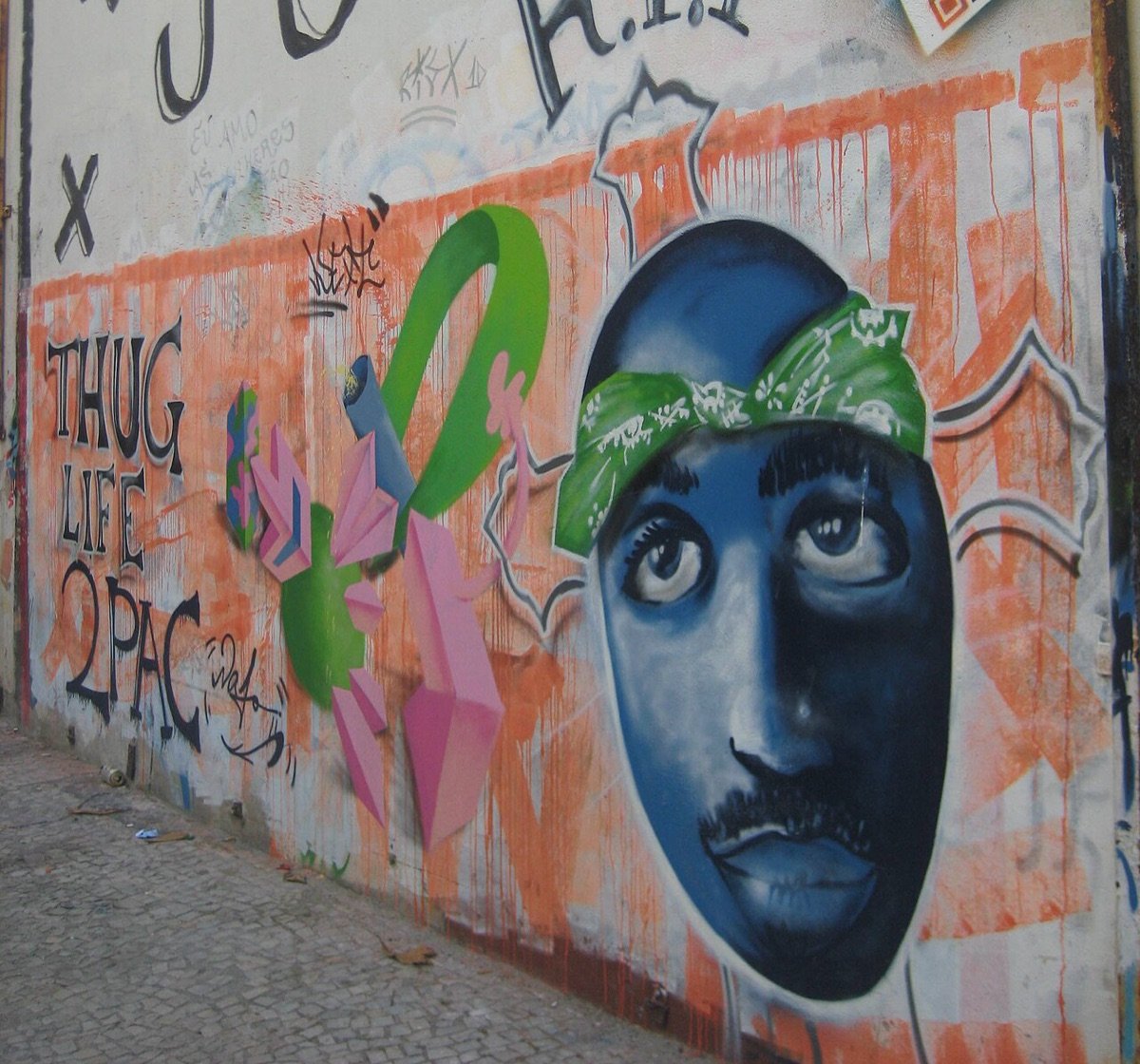
The honest answer: I couldn’t find an interview where Tupac explains it. Fans usually read it as “kill” plus “Illuminati”, which fits the album’s mood, but that is an interpretation, not a documented statement. What is documented is the mix-up around the name. In a 2014 interview, E.D.I. Mean and Riskie Brent said Tupac wanted the album called Killuminati: The 7 Day Theory, with “Makaveli the Don” as the artist, and that the wording got scrambled in the rush to release it.
Why Makaveli?
Tupac read Niccolò Machiavelli’s The Prince while serving his sentence, after the November 1994 shooting, and took the name from it. He was careful to say that he didn’t idolize the man but the way of thinking: doing what it takes to reach a goal. The pseudonym, along with the timing, later fed the theories that he faked his death, which AllMusic’s review at the time put down to Death Row’s marketing. Tupac died on September 13, 1996.
The Makaveli album cover
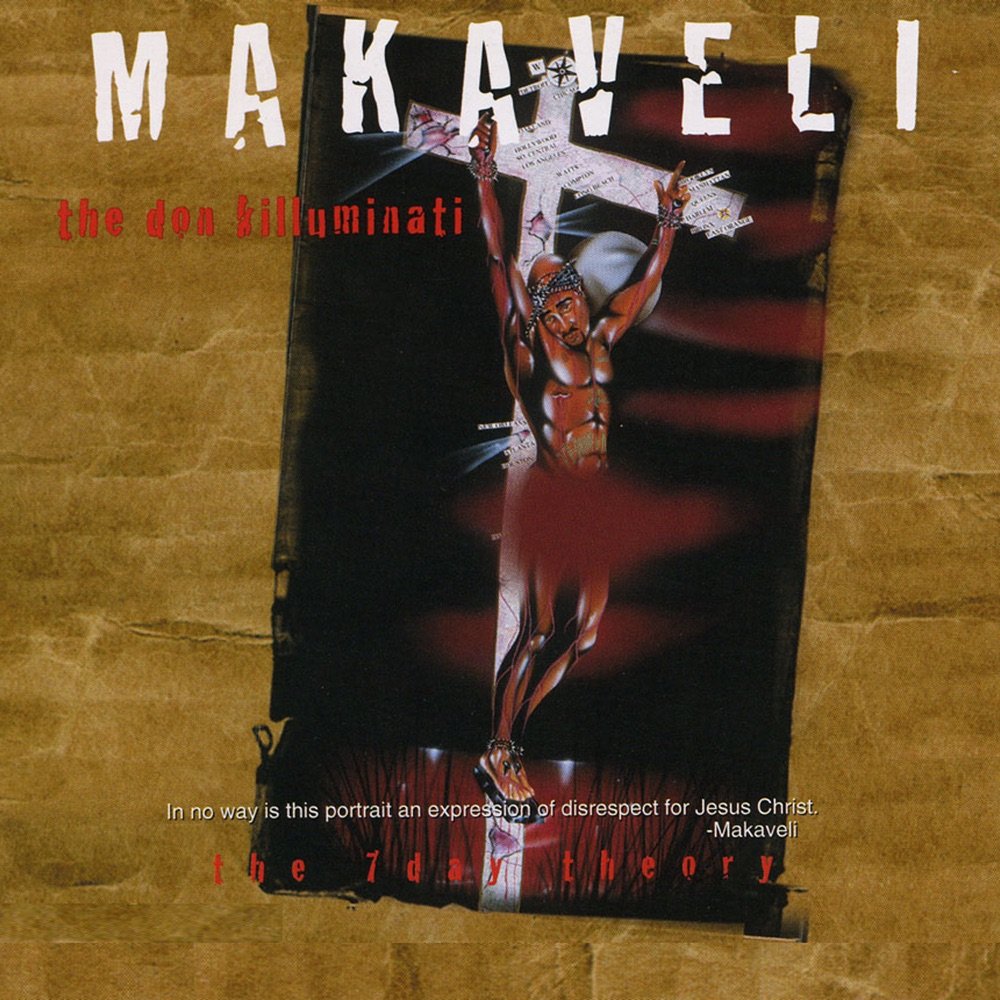
The painting is by Compton artist Ronald “Riskie” Brent, who met Tupac through Suge Knight on the “California Love” remix shoot and showed him his portfolio. The request later came through Death Row’s president: draw Tupac on a cross. It shows him alone in red and black, with a bandana and barbed wire, and a map of American cities on the cross. Complex reports that Tupac thought of it as a map of his enemies’ locations. A line on the front says that the portrait is not meant as disrespect to Jesus Christ. Riskie also said that the original back cover, with images of Biggie and Dr. Dre, was dropped once the project became a commercial release.
Makaveli album sales and reception
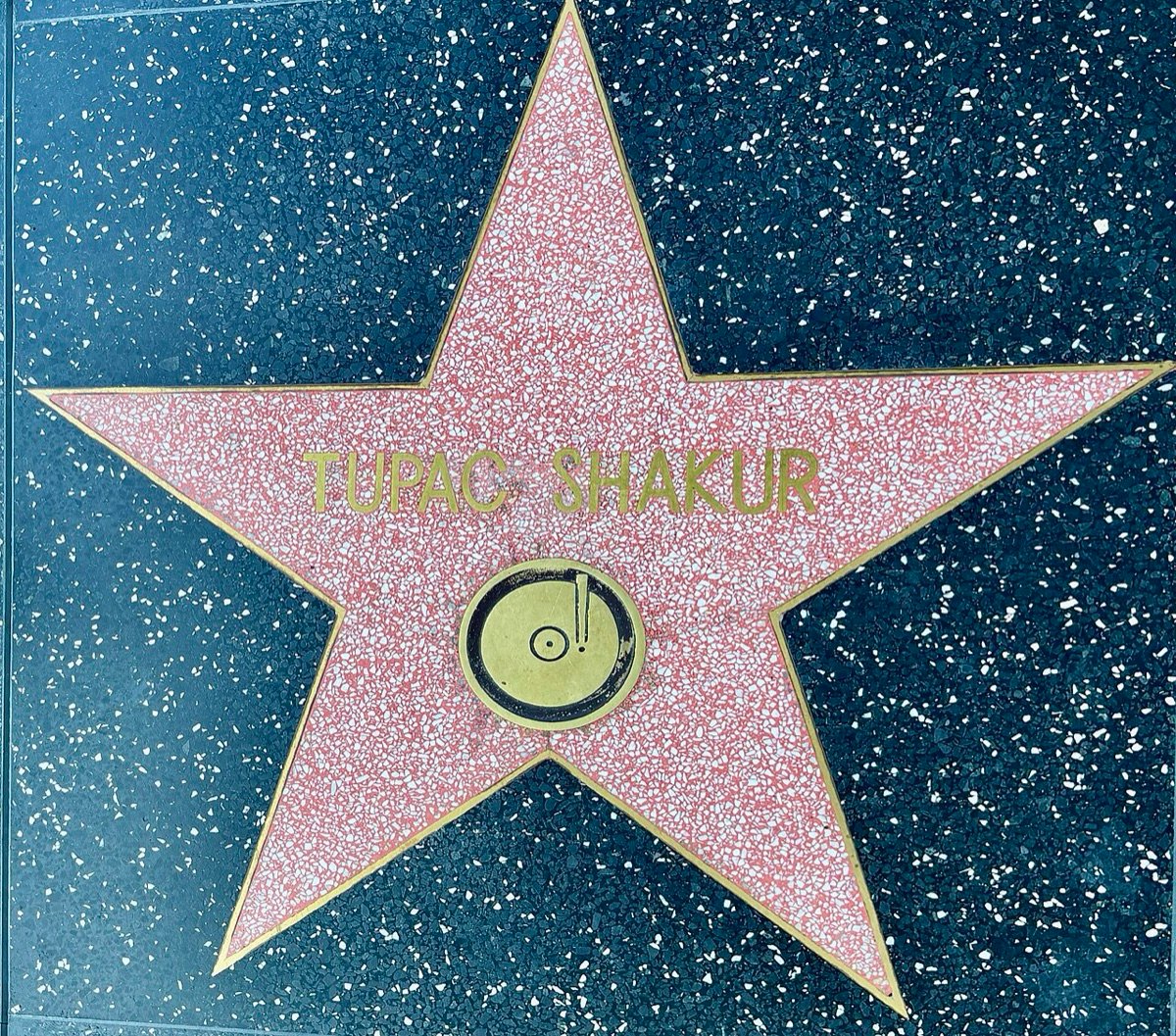
It debuted at No. 1 on the Billboard 200 with 664,000 copies, in the chart dated November 23, 1996, and was certified double platinum by January 1997 and 4× platinum in June 1999. None of its three singles (“Toss It Up”, “To Live & Die in L.A.”, “Hail Mary”) reached the Hot 100.
Critics were split at first. Neil Strauss in the New York Times praised “Hail Mary” and “Krazy” but called the album filler, Stephen Thomas Erlewine at AllMusic gave it 2.5 stars and saw exploitation, and Rolling Stone liked the production more than the lyrics. Time and other rappers overruled them: J. Cole has named it his favorite album, saying he hears it differently every year, and 50 Cent has praised how consistent it is. The feud that runs through “Bomb First” and “Against All Odds” has an ending too: Young Noble recalled Tupac and Nas making peace in New York at the MTV Awards, days before the shooting.

The songs that didn’t make it
The sessions produced more than the album could hold, and searches for the “original tracklist” usually lead here. According to Wikipedia, “Killuminati” and “Black Jesuz” came out on the Outlawz’ Still I Rise; “Let ’Em Have It”, “When Thug’z Cry” and “Friendz” on Until the End of Time; “Lost Souls” on the Gang Related soundtrack. “Watch Ya Mouth” stayed unreleased and leaked online.
Makaveli on vinyl and CD
The Amazon listing is the 2022 Interscope 2LP reissue. It was out of stock in October and on November 4 it was showing through other sellers, so check the condition and who is selling before you buy. The remastered CD is the cheaper way in. I couldn’t confirm an official 30th-anniversary pressing at the time of writing. For more records like this, see our list of the best hip hop vinyl records to own.
Own the recordThe Don Killuminati: The 7 Day TheoryMakaveli
What to hear next
Hear what came right before it. Me Against the World (1995) is what E.D.I. Mean thinks of when he hears “Hold Ya Head”, and All Eyez on Me (1996) is the bright, star-filled double album that makes this one sound even darker.
Own the recordMe Against the World2Pac
Own the recordAll Eyez on Me2Pac
The Don Killuminati: The 7 Day Theory tracklist
| # | Track | Length |
|---|---|---|
| 01 | Bomb First (My Second Reply) (feat. E.D.I. & Young Noble) | 4:57 |
| 02 | Hail Mary (feat. Outlawz) | 5:10 |
| 03 | Toss It Up (feat. Aaron Hall, Danny Boy, K-Ci & JoJo) | 5:06 |
| 04 | To Live & Die in L.A. (feat. Val Young) | 4:33 |
| 05 | Blasphemy | 4:38 |
| 06 | Life of an Outlaw (feat. Outlawz) | 4:56 |
| 07 | Just Like Daddy (feat. Outlawz) | 5:07 |
| 08 | Krazy (feat. Bad Azz) | 5:16 |
| 09 | White Man’z World | 5:38 |
| 10 | Me and My Girlfriend | 5:08 |
| 11 | Hold Ya Head (feat. Hurt-M-Badd) | 3:59 |
| 12 | Against All Odds | 4:37 |
Listen to The Don Killuminati: The 7 Day Theory
Spotify
Apple Music
Own the recordThe Don Killuminati: The 7 Day TheoryMakaveli
How this was made: written by GUIO, a hip hop producer who works on an MPC Live III, from the album’s credits and the interviews and sources below. Samples were checked song by song on WhoSampled. The XXL interviews were read in a fan transcription of the 2003 article, as the original isn’t online, so small details may differ. Where sources disagree, this piece says so.
Verdict
Thirty years later, The Don Killuminati holds up less as a feat of speed than as proof of who was really in charge. Two overlooked producers, a session player and an artist humming parts to them made a record that sounds nothing like the star-filled album before it. It is uneven, furious and full of grudges, and it is hard to stop listening to.
If you are new to it, start with “Hail Mary”, “Krazy” and “Against All Odds”, then play it from the top.
Own the recordThe Don Killuminati: The 7 Day TheoryMakaveli
The Don Killuminati: The 7 Day Theory FAQ
Who produced Makaveli?
Hurt-M-Badd (Tyrone Wrice) and Darryl “Big D” Harper produced most of it, with Tupac co-producing as Makaveli. QDIII produced To Live & Die in L.A., and Dametrius Shipp and Reggie Moore produced Toss It Up. Suge Knight is the executive producer, credited as Simon.
Was The Don Killuminati really recorded in 7 days?
Mostly, but not entirely. XXL describes seven days in August 1996 at Can-Am Studios. Producer Darryl Harper said the album itself took three days, and the rest of the week was mixing. To Live & Die in L.A. was recorded earlier, in July, according to Complex.
What is the Makaveli album release date?
The Don Killuminati: The 7 Day Theory was released on November 5, 1996, less than two months after Tupac Shakur died on September 13, 1996.
What songs are on the Makaveli album?
Twelve: Bomb First (My Second Reply), Hail Mary, Toss It Up, To Live & Die in L.A., Blasphemy, Life of an Outlaw, Just Like Daddy, Krazy, White Man’z World, Me and My Girlfriend, Hold Ya Head and Against All Odds.
Is there a track 13 on the Makaveli album?
No. The official album has 12 tracks. Wikipedia lists an unreleased “Hidden Track” among the session songs that leaked online, but it is not part of the album.
What does Hail Mary by 2Pac sample?
WhoSampled lists no source record for Hail Mary. Producer Hurt-M-Badd said he built the beat in about 15 to 20 minutes. The song itself has been sampled in 121 tracks, including Doechii’s DENIAL IS A RIVER and Lil Wayne’s Right Above It.
What does To Live & Die in L.A. sample?
WhoSampled connects it to Prince’s Do Me, Baby and Tony! Toni! Toné!’s It Never Rains (In Southern California). Complex describes the Prince part as an interpolation, replayed with live instruments.
What does Killuminati mean?
There is no interview I could find where Tupac explains it. Fans read it as a play on kill and Illuminati, but that is an interpretation. E.D.I. Mean and Riskie Brent said Tupac wanted the title Killuminati: The 7 Day Theory, with Makaveli the Don as the artist name.
Was it called The 3 Day Theory?
Yes. The 3-Day Theory was the album’s preliminary title, according to Wikipedia, before it became The 7 Day Theory.
How many copies did the Makaveli album sell?
It sold 664,000 copies in its first week, debuted at No. 1 on the Billboard 200 and was certified 4× platinum by the RIAA in June 1999.
Who made the Makaveli album cover?
Compton artist Ronald “Riskie” Brent painted it, after a request for Tupac to be drawn on a cross.
Next step Keep digging: the best hip hop vinyl records to own →
Sources
- Wikipedia: The Don Killuminati (credits, recording, cover, sales, reception, unused songs)
- WhoSampled: samples and songs that sampled the album, checked track by track
- XXL, “The Making of Makaveli” (2003), fan transcription on Scribd
- Complex: the story of Makaveli (2025)
- American Songwriter: the story of “Hail Mary”, citing Hurt-M-Badd in XXL (2006)
- Time Is Illmatic: track-by-track look at the album
- Wikipedia: Hail Mary (session date and beat)
- Complex: five classic rap songs that sample Prince
- HotNewHipHop: QDIII on Michael Jackson, from BET’s oral history
- AllMusic: The Don Killuminati
- Apple Music: The Don Killuminati: The 7 Day Theory
Cover art and videos: Makaveli, Death Row Records and Interscope. Used for review purposes.