J Dilla “Donuts” Explained: The Story, Samples, Tracklist & Legacy
Released on his 32nd birthday, three days before he died, J Dilla’s Donuts turned 31 short beats into a goodbye letter and the most influential instrumental album in hip hop. This is its story.
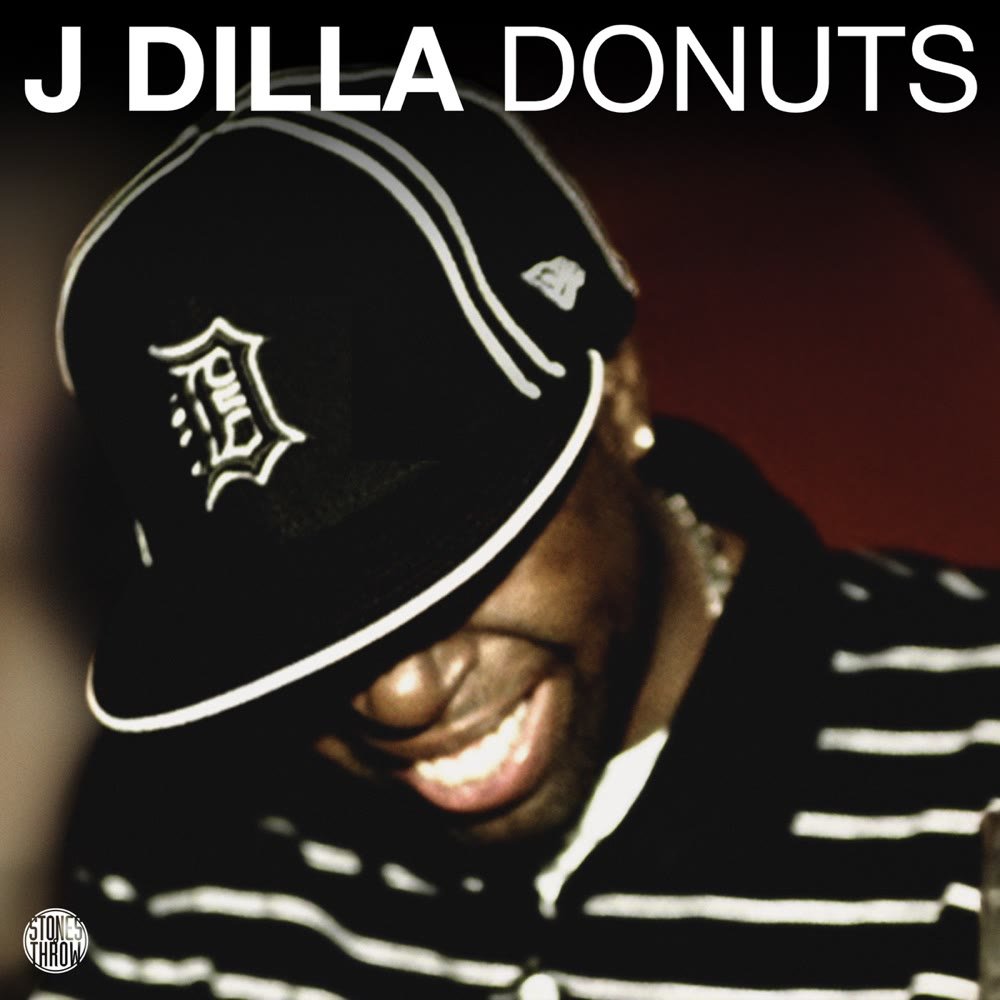
Some albums are classics. Donuts is a legend. J Dilla released it on February 7, 2006, his 32nd birthday, through Stones Throw Records. Three days later, on February 10, he passed away in Los Angeles.
In 43 minutes and 31 short tracks, Donuts turned a beat tape into a work of art: a goodbye letter written with soul samples, sirens, chopped vocals and drums that swing like nobody else’s. Twenty years later it is still one of the most influential hip hop albums ever made, and for many producers, the record that made them want to make beats.
Who was J Dilla?
James Dewitt Yancey was born on February 7, 1974, in Detroit, and grew up in the Conant Gardens neighborhood on the city’s east side. Music ran in the family: his mother, Maureen “Ma Dukes” Yancey, was a former opera singer, and his father, Beverly Dewitt Yancey, a jazz bassist. His younger brother John would also become a musician, Illa J.
At Pershing High School he met T3 and Baatin and formed Slum Village. Around 1992, Detroit musician Amp Fiddler showed him the Akai MPC, the machine that would define his career. Their debut Fan-Tas-Tic Vol. 1 (1997) circulated as a tape and made him a producer’s producer before most fans knew his name.
Jay Dee: the producer behind your favorite producers
As Jay Dee, he quietly shaped the sound of the late ’90s:
- The Pharcyde: “Runnin’” and “Drop” (1995).
- De La Soul: “Stakes Is High” (1996).
- A Tribe Called Quest: as part of The Ummah with Q-Tip and Ali Shaheed Muhammad, on Beats, Rhymes and Life (1996) and The Love Movement (1998).
- Q-Tip: “Vivrant Thing” and “Breathe and Stop” (1999).
- Common: “The Light” (2000).
- Erykah Badu: “Didn’t Cha Know” (2000). Badu’s latest album with The Alchemist still carries that DNA; read our Before The World Blows review.
He was also a core member of the Soulquarians collective with Questlove, D’Angelo, James Poyser, Common, Erykah Badu and Q-Tip. Under his own name he released Welcome 2 Detroit (2001), and with Madlib he formed Jaylib for Champion Sound (2003). In 2004 he moved to Los Angeles, closer to Stones Throw.

Dilla Time: the swing that changed rhythm
Before Dilla, most programmed hip hop sat on the grid. Dilla turned the quantize off on his MPC and played drums by hand, letting kicks, snares and hi-hats land slightly early or late, rushing here and dragging there. The result sounds “drunk”, loose and human, and it changed how a whole generation hears rhythm.
Journalist Dan Charnas called it Dilla Time in his 2022 book: a feel that mixes straight and swung time at once. You can hear it in neo-soul, in jazz drummers like Karriem Riggins and Chris Dave, in lo-fi hip hop and in countless beat tapes. For producers, it is the ultimate lesson: the grid is a tool, not a rule.
How Donuts was made
By 2005 Dilla was seriously ill with thrombotic thrombocytopenic purpura (TTP), a rare blood disease, and lupus. He spent long periods at Cedars-Sinai Medical Center in Los Angeles. The famous story says he made Donuts from his hospital bed, with friends bringing him a Boss SP-303 sampler, a small 45 turntable and crates of records.
The full story is a bit more complex. In Dilla Time, Charnas explains that after leaving the hospital on March 16, 2005, Dilla built much of the material at home as a beat tape, using records he bought at Rockaway Records in Silver Lake. Stones Throw art director Jeff Jank then helped edit and sequence it into the album we know, asking Dilla for extra pieces to extend it. Both versions agree on the essential: this was a man racing against time, still making beats every day.
The album is designed as a loop. The first track is the “Outro”, and the last one, “Welcome to the Show”, flows back into the beginning. Even the title is personal: Dilla simply loved donuts.
The sound: 31 beats, zero filler
Most tracks last between one and two minutes. Dilla chops soul, funk, rock and pop records into tiny fragments, repeats a vocal phrase until it becomes a message, drops in sirens and crowd noise, and cuts a beat right when you want more. Some loops feel joyful, others heartbreaking, and many switch moods in the middle.
From a producer’s point of view, Donuts is a masterclass in three things:
- Sample selection: knowing the exact half-second of a record that carries the emotion.
- Chopping as storytelling: vocal snippets like “Stop!”, “Don’t cry” or “I really love you” turn instrumentals into a conversation.
- Arrangement by contrast: abrupt cuts, filters and drops instead of long builds. Every second earns its place.

Key samples on Donuts
Donuts uses around 34 samples from soul, jazz, funk and rock records. These are some of the most famous:
| Track | Sampled from |
|---|---|
| Workinonit | 10cc – “The Worst Band in the World” |
| Stop | Dionne Warwick – “You’re Gonna Need Me” |
| People | Eddie Kendricks – “People… Hold On” |
| The Diff’rence | Kool & the Gang – “Fruitman” |
| Time: The Donut of the Heart | The Jackson 5 – “All I Do Is Think of You” |
| Don’t Cry | The Escorts – “I Can’t Stand (To See You Cry)” |
| Bye. | The Isley Brothers – “Don’t Say Goodnight (It’s Time for Love)” |
Highlights
- “Workinonit”: the 10cc flip that opens the album in full force, later used by Dave Chappelle in his 2017 Netflix specials.
- “Stop”: Dionne Warwick turned into a warning, with that unforgettable vocal chop.
- “Time: The Donut of the Heart”: pure love, built on The Jackson 5. Maybe the most beautiful minute and a half on the record.
- “Don’t Cry”: The Escorts’ plea becomes one of hip hop’s most emotional loops, often read as Dilla talking to his mother.
- “Last Donut of the Night”: lush strings and snapping drums, a farewell that never quite ends.

Legacy: why Donuts still matters
On release, critics liked it. Pitchfork gave it 7.9 in 2006, but when the album was reissued it gave it a perfect 10/10. Rolling Stone placed it at No. 386 in its 2020 list of the 500 Greatest Albums of All Time, and Pitchfork ranked it among the best albums of the 2000s.
Its beats have been rapped over by Ghostface Killah (“Whip You With a Strap”, from “One for Ghost”) and MF DOOM, and its beats have been sampled, reworked or honored by artists like The Roots, Nas, Drake and Lupe Fiasco. Modern beatmakers like Knxwledge, Kenny Beats and BadBadNotGood follow the path it opened, and the whole lo-fi hip hop and beat tape culture grows from it.
His family and friends keep his memory alive through the J Dilla Foundation and Dilla Day celebrations every February. And his Akai MPC3000 and custom Minimoog Voyager are part of the collection of the Smithsonian’s National Museum of African American History and Culture. If you want to know what MPC culture looks like today, check our reviews of the MPC Live III and the MPC One G2.
Two books go deeper: Jordan Ferguson’s J Dilla’s Donuts (33⅓ series, 2014) and Dan Charnas’ Dilla Time: The Life and Afterlife of J Dilla (2022).

Donuts tracklist
| # | Track | Length |
|---|---|---|
| 01 | Donuts (Outro) | 0:12 |
| 02 | Workinonit | 2:57 |
| 03 | Waves | 1:38 |
| 04 | Light It | 0:35 |
| 05 | The New | 0:49 |
| 06 | Stop | 1:39 |
| 07 | People | 1:23 |
| 08 | The Diff’rence | 1:52 |
| 09 | Mash | 1:31 |
| 10 | Time: The Donut of the Heart | 1:38 |
| 11 | Glazed | 1:21 |
| 12 | Airworks | 1:44 |
| 13 | Lightworks | 1:55 |
| 14 | Stepson of the Clapper | 1:01 |
| 15 | The Twister (Huh, What?) | 1:16 |
| 16 | One Eleven | 1:11 |
| 17 | Two Can Win | 1:47 |
| 18 | Don’t Cry | 1:59 |
| 19 | Anti-American Graffiti | 1:53 |
| 20 | Geek Down | 1:19 |
| 21 | Thunder | 0:54 |
| 22 | Gobstopper | 1:05 |
| 23 | One for Ghost | 1:18 |
| 24 | Dilla Says Go | 1:16 |
| 25 | Walkinonit | 1:15 |
| 26 | The Factory | 1:23 |
| 27 | U-Love | 1:00 |
| 28 | Hi. | 1:16 |
| 29 | Bye. | 1:27 |
| 30 | Last Donut of the Night | 1:39 |
| 31 | Welcome to the Show | 1:11 |
Listen to Donuts
Spotify
Apple Music
Prefer vinyl? Donuts is available from Stones Throw, including the 10th anniversary reissue with the original cover art.
Verdict
Donuts is not just a great instrumental album. It is proof that a beat can say everything a song says: love, humor, fear, gratitude and goodbye. It sounds unfinished on purpose, and that is exactly why it feels alive.
If you make beats, study it. If you have never heard it, start with “Workinonit”, “Stop” and “Don’t Cry”, then press play from the beginning and let it loop. Twenty years later, nobody has made another Donuts. Nobody needs to. It is J Dilla’s, forever.
Donuts FAQ
When was J Dilla’s Donuts released?
Donuts was released on February 7, 2006, by Stones Throw Records, on J Dilla’s 32nd birthday. He died three days later, on February 10, 2006.
Was Donuts made in the hospital?
Partly. The famous story says J Dilla made it at Cedars-Sinai Medical Center with a Boss SP-303 and a portable turntable. Dan Charnas’ book Dilla Time adds that much of it was built at home as a beat tape after he left hospital in March 2005, then edited with Stones Throw’s Jeff Jank.
What equipment was used on Donuts?
J Dilla is associated with a Boss SP-303 sampler and a portable 45 turntable for Donuts, plus home sessions on his laptop. His signature machine throughout his career was the Akai MPC3000.
What does “Workinonit” sample?
The opening beat “Workinonit” samples 10cc’s “The Worst Band in the World”.
How many tracks are on Donuts?
31 tracks, with a total running time of about 43 minutes. The album starts with the “Outro” and ends with “Welcome to the Show”, so it loops back to the beginning.
What is “Dilla Time”?
It is the name Dan Charnas gave to J Dilla’s rhythmic feel: unquantized drums that mix straight and swung timing, making beats feel loose, “drunk” and human. It influenced neo-soul, jazz, lo-fi hip hop and modern beatmaking.
Sources
- Wikipedia: Donuts (album): release, samples, reception and legacy
- Wikipedia: J Dilla: biography and discography
- Apple Music: Donuts (tracklist and running times)
- Perfect Circuit: J Dilla’s Donuts, a retrospective
- Equipboard: gear used on Donuts
- Stones Throw Records
Cover art and videos: J Dilla Estate and Stones Throw Records. Used for review purposes.